Deep Tech
Bringing AI to Life: The Emergence of Physical AI

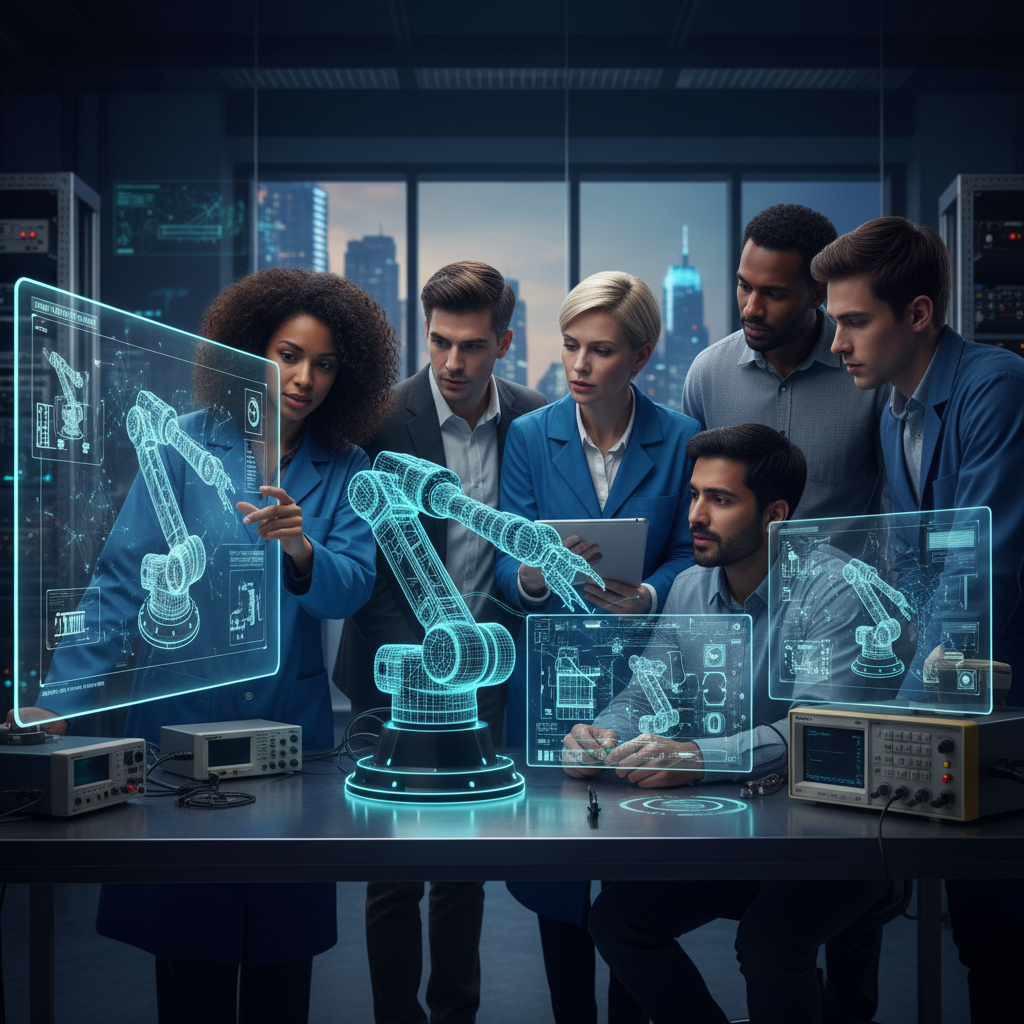
Artificial Intelligence has profoundly reshaped our digital landscape, optimizing processes, personalizing experiences, and extracting insights from vast datasets. Yet, for all its computational prowess, a significant frontier remains: the intelligent interaction with the physical world. This is the domain of Physical AI, where algorithms and models are embedded into hardware, enabling systems to perceive, reason, and act autonomously within tangible environments.
Physical AI is not merely about equipping a robot with a camera. It represents a paradigm shift where AI moves beyond screens and servers to control, manipulate, and navigate the complexities of our physical reality. From autonomous vehicles and drones to robotic surgeons and smart factories, these systems promise unprecedented levels of efficiency, safety, and capability. For founders, understanding this convergence of advanced AI and sophisticated hardware is crucial, as it unlocks a new generation of venture opportunities with significant societal impact and market potential.
Defining the Landscape of Physical AI
Physical AI encompasses a broad spectrum of technologies and applications where AI systems directly influence or operate in the physical world. It goes beyond traditional robotics by emphasizing the intelligence and adaptability of the system's interaction with its environment.
Key characteristics of Physical AI include:
- Embodied Intelligence: The AI is integrated into a physical form factor, whether a robot, a sensor network, or an autonomous vehicle, allowing it to perform tasks in real-world settings.
- Perception and Cognition: Advanced sensor fusion, computer vision, natural language processing, and other AI techniques enable these systems to understand their environment, interpret data, and make informed decisions.
- Actuation and Control: The ability to execute physical actions, such as movement, manipulation, or interaction with objects, based on AI-driven reasoning.
- Adaptability and Learning: Physical AI systems are designed to learn from experience, adapt to changing conditions, and improve their performance over time, often through reinforcement learning or simulation.
Consider the evolution: early factory robots were programmable manipulators, executing pre-defined tasks. Modern Physical AI systems, however, can inspect a part for defects, decide how to pick it up even if its orientation changes, and dynamically adjust their movements to avoid an unexpected obstacle. This leap from programmed automation to intelligent autonomy is what defines the Physical AI era.
The Unique Challenges of Commercializing Physical AI
Building a successful Physical AI venture is inherently more complex than a pure software play. Founders must navigate a multi-layered set of challenges that span hardware, software, real-world data, and regulatory hurdles.
-
Hardware Development Cycles and Costs: Unlike software, which can be iterated rapidly, hardware development involves significant upfront investment in R&D, prototyping, manufacturing, and supply chain management. The physical product must be robust, reliable, and cost-effective to produce at scale.
- Common Mistake: Underestimating the capital required for hardware tooling and validation, leading to funding gaps or critical delays.
- Practical Insight: Prioritize modular design to allow for incremental improvements and minimize redesigns. Explore contract manufacturing partners early.
-
Bridging the Sim-to-Real Gap: AI models are often trained in simulations, but transferring that intelligence to the messy, unpredictable real world is a significant hurdle. Factors like sensor noise, unexpected physics, and environmental variations can cause models to fail.
- Common Mistake: Deploying models directly from simulation without extensive real-world validation and fine-tuning.
- Practical Insight: Invest in robust sensor calibration, domain randomization in simulations, and iterative deployment strategies like shadow modes or staged rollouts.
-
Data Collection and Annotation for Physical Environments: Training data for physical AI is often expensive and time-consuming to acquire. Real-world scenarios, especially edge cases, are hard to capture comprehensively.
- Common Mistake: Relying solely on synthetic data without sufficient real-world data to anchor the models.
- Practical Insight: Develop efficient data collection pipelines, leverage active learning techniques, and consider data partnerships with early customers.
-
Safety, Reliability, and Regulation: Physical AI systems can directly impact human safety. This necessitates rigorous testing, robust failure modes, and adherence to evolving regulatory standards (e.g., for autonomous vehicles, medical devices, or industrial robotics).
- Common Mistake: Overlooking compliance and safety-by-design from the initial product concept.
- Practical Insight: Engage with industry safety standards bodies and legal experts early. Implement redundancy and fail-safe mechanisms as core architectural principles.
-
Interdisciplinary Team Building: Physical AI ventures require diverse expertise, including robotics engineers, AI researchers, software developers, hardware designers, manufacturing experts, and domain specialists. Attracting and retaining such talent is competitive.
- Common Mistake: Building a team skewed too heavily towards software or hardware, lacking critical interdisciplinary synergy.
- Practical Insight: Foster a culture of collaboration across disciplines. Look for individuals with cross-functional experience or a strong desire to learn outside their primary domain.
Practical Frameworks for Physical AI Founders
To navigate these complexities, founders can adopt structured approaches that prioritize iteration, safety, and real-world performance.
1. The Iterative Hardware-Software Co-Design Loop
Unlike traditional product development where hardware might precede software, Physical AI demands a continuous, integrated loop:
- Concept & Requirements (Software-Driven): Define the intelligent behavior and capabilities needed. What decisions should the AI make? What outcomes are desired?
- Hardware Design & Prototyping (Supporting Software): Design hardware that provides the necessary sensors, actuators, processing power, and physical resilience to execute the AI's functions.
- Software Development & Simulation (Testing AI): Develop AI models and control algorithms. Extensively test in simulation to validate logic and identify initial performance bottlenecks.
- Real-World Integration & Testing (Validating AI & Hardware): Integrate software with hardware prototypes. Conduct real-world testing in controlled environments, meticulously collecting data on performance, errors, and edge cases.
- Data Analysis & Refinement (Improving AI): Analyze real-world data to identify areas for AI model improvement, sensor calibration, or even hardware modifications.
- Repeat: This loop continues, gradually expanding to more complex scenarios and environments, ensuring that both the intelligence and its physical embodiment evolve in tandem.
2. The Layers of Autonomy Progression (LoAP) Model
Instead of aiming for full autonomy from day one, progress through defined stages of intelligent capability:
- Assisted Operation: AI provides recommendations or assistance to a human operator (e.g., driver-assist features in cars).
- Supervised Automation: AI performs tasks autonomously but requires continuous human oversight and intervention capabilities (e.g., remote-controlled drones with AI navigation).
- Conditional Autonomy: AI operates autonomously under specific, well-defined conditions, notifying humans when it encounters scenarios outside its operational design domain (ODD) (e.g., self-driving in geofenced areas).
- High Autonomy: AI operates autonomously in most conditions, with human intervention only for rare, complex edge cases (e.g., fully autonomous factory robots).
- Full Autonomy: AI operates entirely on its own, without any human intervention (the ultimate, long-term goal for many applications, but rarely achieved in practice today).
This staged approach allows for incremental learning, validates performance at each level, and manages the regulatory and safety risks associated with increasing autonomy.
3. Edge Case Mitigation Strategy
Physical AI's biggest challenge lies in robustly handling the unforeseen. A proactive edge case strategy is vital:
- Systematic Scenario Generation: Brainstorm and categorize potential failure modes, environmental conditions, and unusual interactions specific to your application domain. Consider both known unknowns and unknown unknowns.
- Data-Driven Edge Case Identification: Use real-world deployment data (even from early, limited deployments) to identify situations where the AI struggled or failed. This often reveals unanticipated challenges.
- Simulation Augmentation: Recreate identified edge cases in simulation for high-volume testing and model training, saving real-world testing costs.
- Failsafe and Degraded Modes: Design explicit backup plans. What happens if a sensor fails? What if communication is lost? How does the system gracefully degrade performance rather than catastrophically fail?
- Human-in-the-Loop Redundancy: For critical applications, ensure a human can always take over or intervene. This might involve remote supervision or local override capabilities.
Actionable Advice for Founders This Week
Founders in the Physical AI space can immediately implement several strategies to strengthen their venture:
- Deep Dive into a Specific Problem: Don't build a general-purpose robot. Identify a precise, high-value problem that can be solved by a specialized Physical AI solution. For example, instead of "robots for logistics," focus on "autonomous last-mile delivery for cold chain pharmaceuticals."
- Talk to Domain Experts: Engage deeply with the end-users and operational experts in your target industry. Understand their workflows, pain points, and current solutions. This will reveal critical constraints and requirements for your physical system.
- Map Out Your Data Strategy: How will you acquire, store, label, and use data? Begin thinking about the tools and processes needed for real-world data collection, even if it's just from manual operations initially.
- Prioritize Safety from Day One: Conduct a preliminary hazard analysis for your envisioned system. What are the riskiest operations? How can you mitigate them? Integrating safety early saves immense costs and redesigns later.
- Evaluate Supply Chain & Manufacturing Early: Even at the prototyping stage, consider the availability and cost of components, lead times, and potential manufacturing partners. Early conversations can prevent scaling bottlenecks.
- Build a Core Interdisciplinary Prototype Team: Even if it's just two or three people, ensure you have representation for both the physical (mechanical, electrical) and the intelligent (AI, software) aspects from the very beginning.
Physical AI is not just about advancing technology; it's about transforming industries and redefining human capabilities. The ventures that succeed will be those that master the intricate dance between sophisticated intelligence and robust physical embodiment, always with an eye toward real-world application and unwavering reliability.
How Synapses Ventures Can Help
Synapses Ventures partners with founders, researchers, and entrepreneurs at the vanguard of deep technology, including Physical AI. Our venture-building approach goes beyond traditional funding, providing comprehensive strategic guidance from ideation to commercialization. We collaborate closely to refine product-market fit, develop robust technical roadmaps for complex hardware-software systems, and navigate the intricate challenges of manufacturing and deployment. With access to a global network of industry experts, technical talent, and strategic capital, we empower innovators to transform breakthrough Physical AI concepts into scalable, market-leading companies that are built for enduring impact and real-world application.
Share this article
Bringing AI to Life: The Emergence of Physical AI

Physical AI bridges the gap between digital intelligence and the tangible world, ushering in a new era of autonomous systems.

Inside the piece:
• What actually moves the needle for early-stage founders
• How we apply it across the Synapses venture portfolio
• The practical next step you can take this week

Read the full article → https://synapsesventures.com/s/bringing-ai-to-life-the-emergence-of-physical-ai

#SynapsesVentures #DeepTech #FrontierTech #RnD