Artificial Intelligence
Unlocking the Future: Navigating Physical AI for Founders

The landscape of artificial intelligence is rapidly expanding beyond the digital realm, venturing into the tangible world of atoms and actions. This evolution, often termed Physical AI, represents a monumental shift, enabling intelligent systems to perceive, reason, and act within real-world environments. For founders, this domain presents not just a new set of technological challenges but also unprecedented opportunities to solve pressing problems across industries, from manufacturing and healthcare to logistics and environmental management.
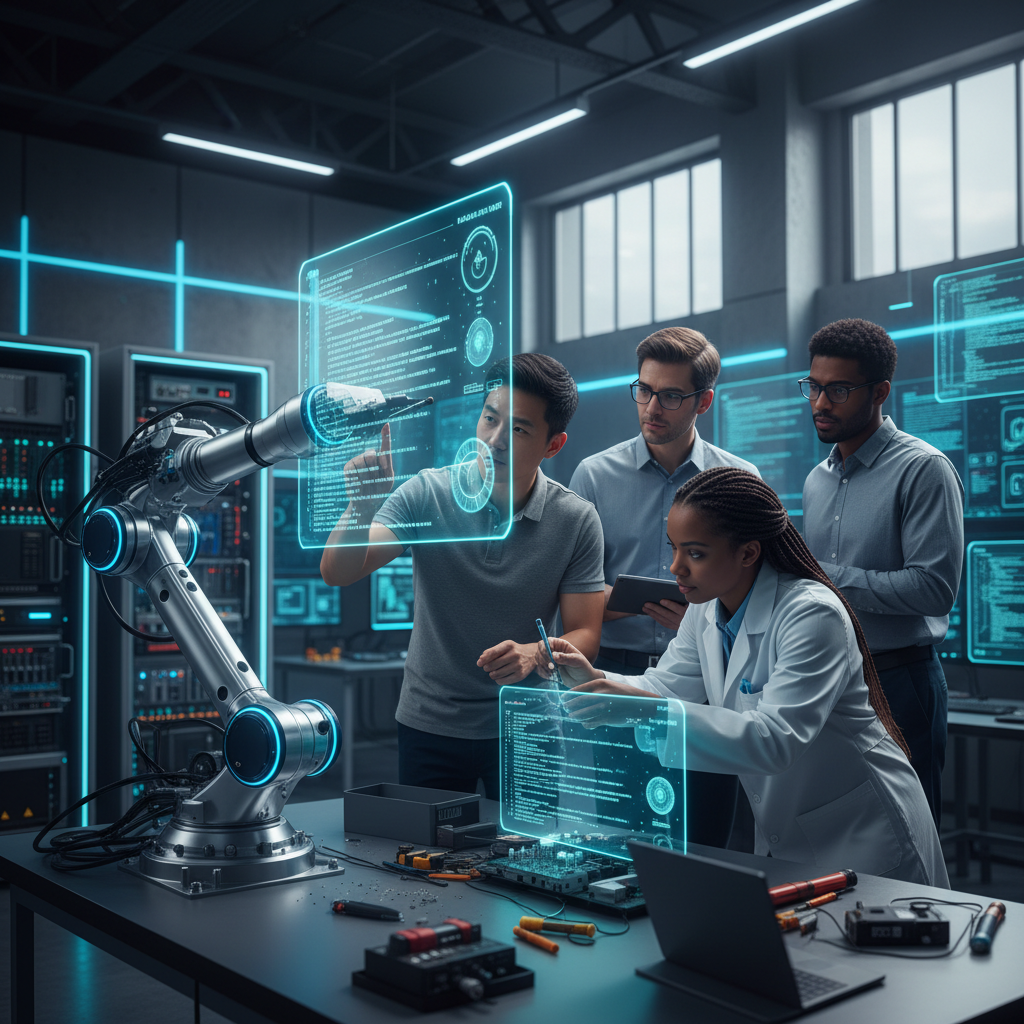
Physical AI encompasses the integration of AI with robotics, autonomous systems, and embedded hardware. Unlike purely software-based AI, which operates within data centers and virtual environments, Physical AI directly interacts with its surroundings through sensors and actuators. Think of Boston Dynamics' agile robots, autonomous vehicles navigating complex cityscapes, or intelligent surgical instruments – these are all manifestations of Physical AI. This intersection demands a holistic approach, blending advanced algorithms with robust engineering and a deep understanding of physical constraints.
Founders looking to innovate in this space must move beyond traditional software-centric startup models. Building a Physical AI company involves navigating complex supply chains, managing hardware development cycles, ensuring safety and reliability in physical interactions, and addressing regulatory hurdles. The payoff, however, can be immense: creating solutions that directly impact physical productivity, human well-being, and resource efficiency on a global scale. This article will explore the unique characteristics of Physical AI, identify common pitfalls, and provide actionable strategies for founders ready to tackle this transformative domain.
Understanding the Core Components of Physical AI
To build effectively in Physical AI, founders must appreciate its multifaceted nature. It's not just about a single algorithm or a piece of hardware, but the seamless integration of several critical components working in concert.
1. Sensing and Perception: Physical AI systems must accurately perceive their environment. This involves an array of sensors—cameras, LiDAR, radar, ultrasonic sensors, tactile sensors—that collect vast amounts of data. The AI then processes this data to understand objects, distances, movements, and environmental conditions. Challenges include sensor fusion, dealing with noise and occlusion, and interpreting ambiguous sensory inputs in real-time.
2. Reasoning and Decision-Making: Once perceived, the AI must reason about its environment and decide on appropriate actions. This involves sophisticated algorithms for path planning, object manipulation, task sequencing, and predictive modeling. Machine learning models, particularly deep learning, are crucial here for making sense of complex situations and adapting to new information.
3. Actuation and Control: The decisions made by the AI are translated into physical actions through actuators—motors, grippers, robotic arms, or vehicle controls. Precision, speed, and robustness in actuation are paramount. The control systems must ensure stable, safe, and efficient interaction with the physical world, often in dynamic and unpredictable environments.
4. Embodiment and Hardware: Unlike software AI, Physical AI requires a physical form factor – a robot, a drone, an autonomous vehicle, or an intelligent device. The design, materials, power source, and manufacturing of this hardware are fundamental. Reliability, durability, and cost-effectiveness of the physical platform are as critical as the intelligence it houses.
5. Edge Computing and Connectivity: Often, Physical AI systems need to make real-time decisions without constant cloud connectivity. This necessitates powerful, energy-efficient AI processing at the edge—directly on the device. When connectivity is available, robust communication protocols are essential for data sharing, updates, and remote monitoring.
Founders often underestimate the complexity arising from the interplay of these elements. A weakness in one area can undermine the entire system, regardless of the sophistication of other parts.
Practical Strategies for Building a Physical AI Venture
Launching a Physical AI company requires a strategic blueprint that accounts for its unique challenges. Here are actionable insights for founders:
1. Define a Narrow, High-Impact Problem: Physical AI development is resource-intensive. Avoid broad problem statements. Instead, identify a specific, acute pain point in an industry where current solutions are inadequate or non-existent, and where a physical AI solution offers a clear, measurable advantage. For instance, instead of "robots for logistics," consider "autonomous last-mile delivery for urban pharmacy chains" or "AI-powered robotic sorting of mixed recyclables."
2. Prioritize Safety and Reliability from Day One: In the physical world, mistakes can have serious consequences. Build safety protocols, fault tolerance, and rigorous testing into every stage of development. This includes hardware design, software architecture, and operational procedures. Early investment in safety frameworks will prevent costly retrofits and regulatory roadblocks later.
3. Embrace a Full-Stack Approach, Strategically: While specialized teams are necessary, successful Physical AI ventures often require a holistic understanding of hardware, software, and AI. This doesn't mean your founders must be experts in all, but your initial team needs a strong blend of capabilities. Consider strategic partnerships for highly specialized components where in-house development isn't feasible initially.
4. Iterative Hardware Development with Software-First Mindset: Hardware development is slower and more expensive than software. Mitigate risk by designing hardware for modularity and upgradability. Where possible, simulate physical interactions extensively before committing to expensive prototypes. Develop and validate core AI algorithms and control software in simulation environments first, then transition to minimal viable hardware platforms. This allows for faster iteration on the intelligence while de-risking the physical component.
5. Focus on Data Acquisition and Annotation Strategy: Physical AI systems are only as good as the data they're trained on. Develop a robust strategy for collecting, labeling, and managing real-world data. Consider edge cases, diverse environments, and failure scenarios. Data collection can be a competitive advantage, so plan for scalable, efficient data pipelines.
6. Understand Regulatory and Ethical Landscape: Autonomous systems interacting with humans or critical infrastructure are subject to evolving regulations. Engage with regulatory bodies early, understand certification processes, and consider the ethical implications of your technology, particularly concerning job displacement, privacy, and accountability.
Common Pitfalls and How to Avoid Them
The journey in Physical AI is fraught with unique challenges. Recognizing these early can save significant time and capital.
-
Underestimating Hardware Complexity and Costs: Founders often apply software development timelines to hardware. Hardware requires capital for tooling, manufacturing, certifications, and inventory, often with longer lead times. Mitigation: Factor in significant buffers for hardware development, establish clear milestones for hardware iterations, and explore contract manufacturing partners early.
-
Ignoring the "Last Mile" of Physical Interaction: An AI that works perfectly in simulation may fail catastrophically in the real world due to unexpected friction, varied lighting, subtle material differences, or dynamic human interaction. Mitigation: Prioritize robust real-world testing in diverse conditions, invest in advanced sensing and robust control systems, and design for adaptability to unexpected environments.
-
Lack of Domain Expertise Integration: Physical AI solutions must deeply understand the problem domain. A brilliant robotics engineer without healthcare knowledge might build a surgical robot that's impractical in an operating room. Mitigation: Embed domain experts within the core product development team, conduct extensive user research, and run pilot programs with target customers.
-
Scalability Challenges Beyond the Lab: Achieving a working prototype is one thing; scaling production and deployment is another. Manufacturing at scale, field maintenance, and secure updates for a fleet of physical devices pose complex operational challenges. Mitigation: Design for manufacturability (DFM) from the outset, establish clear service and support models, and plan for over-the-air updates for software components.
-
Over-reliance on Perfect Data: Real-world data is messy, incomplete, and biased. Systems trained solely on pristine datasets will struggle. Mitigation: Develop strategies for handling noisy data, implement robust error detection and recovery, and train models on diverse, adversarial, and synthesized data to improve generalization.
The Founder's Blueprint for Physical AI Success
Founders entering the Physical AI arena should adopt a structured, disciplined approach. Here’s a summary framework:
- Validate Problem & Market:
- Identify a specific, high-value problem in a target industry.
- Quantify the pain point and market size.
- Assess existing solutions and competitive landscape.
- Define the unique value proposition of your physical AI.
- Architect for Real-World Robustness:
- Design system architecture considering hardware, software, and AI interdependencies.
- Prioritize modularity for sensing, reasoning, and actuation.
- Integrate fault tolerance and safety features from concept.
- Plan for data collection, annotation, and model training pipelines.
- Build Iteratively, Test Rigorously:
- Start with simulations and virtual environments for AI and control logic.
- Develop Minimum Viable Hardware (MVH) for early physical testing.
- Implement continuous integration/continuous deployment (CI/CD) for software and firmware.
- Conduct extensive real-world testing under diverse and challenging conditions.
- Assemble a Full-Stack, Interdisciplinary Team:
- Recruit expertise in AI/ML, robotics, hardware engineering, and control systems.
- Integrate domain experts to ensure problem-solution fit.
- Foster collaboration across disciplines.
- Plan for Commercialization & Scale:
- Develop a clear go-to-market strategy for hardware and associated services.
- Establish manufacturing, supply chain, and deployment plans.
- Address regulatory compliance and certification pathways early.
- Define a post-deployment service and support model.
- Secure Patient Capital:
- Understand the longer development cycles and higher capital needs of Physical AI.
- Seek investors who understand deep tech and hardware complexities.
- Articulate clear milestones and de-risking strategies for each funding round.
The Future is Embodied Intelligence
Physical AI is not just an incremental improvement; it represents a fundamental shift in how we interact with and reshape our physical world. From autonomous factories that reconfigure themselves on demand to intelligent healthcare devices that assist surgeons with unparalleled precision, the potential for impact is staggering. Founders who grasp the unique intersection of algorithms, engineering, and real-world physics will be the architects of this future. This field demands tenacity, interdisciplinary collaboration, and a willingness to solve problems where the digital meets the durable. The challenges are significant, but the rewards—in terms of both commercial success and societal impact—are potentially transformative.
How Synapses Ventures Can Help
Synapses Ventures partners with founders, researchers, entrepreneurs, and innovators who are tackling the complex challenges of Physical AI. We understand that transforming breakthrough ideas into scalable ventures in this domain requires more than just capital. Our venture building approach provides strategic guidance through every stage, from concept validation and product development to market entry and commercialization. We help navigate the intricate blend of hardware design, sophisticated AI development, and real-world deployment. Founders gain access to our extensive network of deep tech experts, engineering talent, manufacturing partners, and specialized investors, accelerating their journey from foundational research to market leadership. By working together, we provide the frameworks, operational support, and patient capital necessary to build robust, impactful Physical AI companies that reshape industries and improve lives globally.
Share this article
Unlocking the Future: Navigating Physical AI for Founders

Physical AI, where artificial intelligence meets the tangible world, is rapidly emerging as the next frontier for innovation.

Inside the piece:
• What actually moves the needle for early-stage founders
• How we apply it across the Synapses venture portfolio
• The practical next step you can take this week

Read the full article → https://synapsesventures.com/s/navigating-physical-ai-for-founders

#SynapsesVentures #StartupInsights #VentureCapital #Innovation