Innovation
The Enduring Nexus: How Entrepreneurship and Innovation Compound

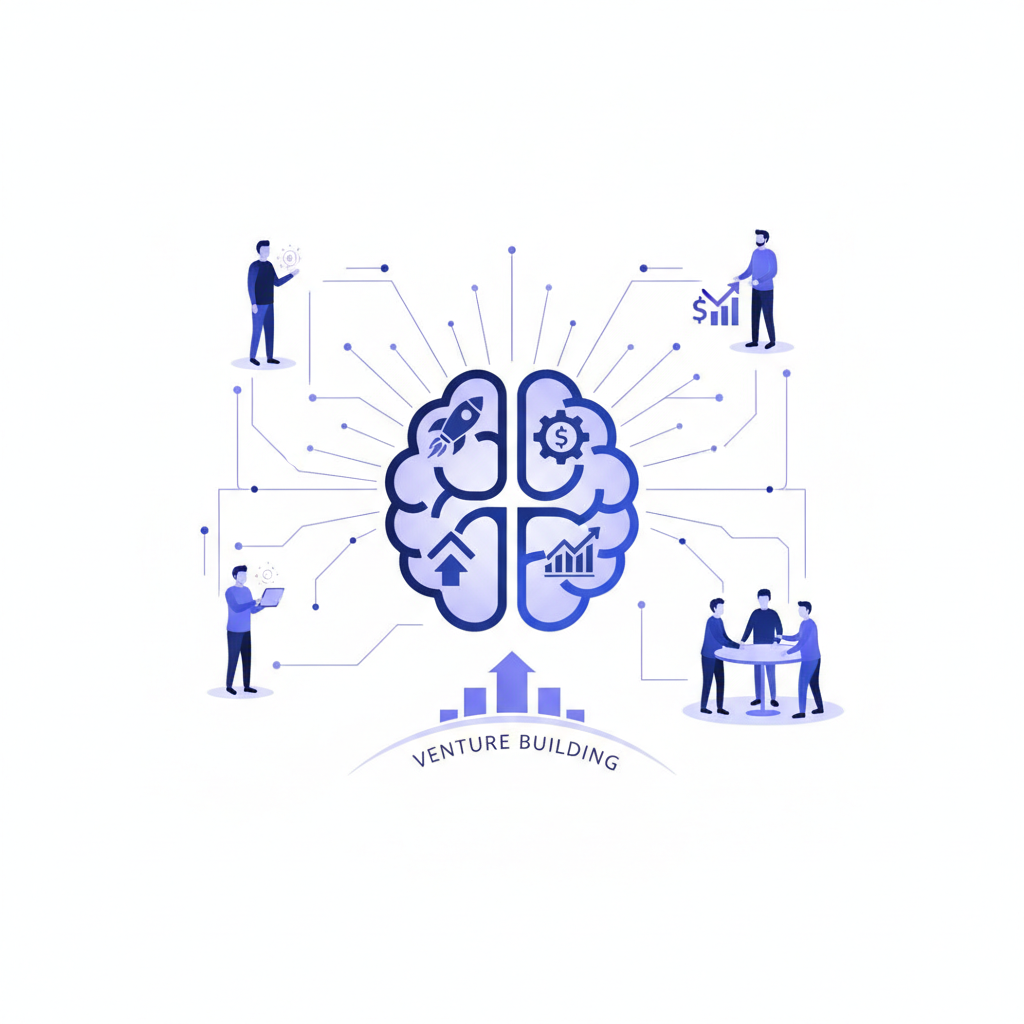
Innovation is routinely heralded as the lifeblood of progress, while entrepreneurship is often seen as the engine that brings new ideas to market. Individually, they are powerful forces. When strategically combined, however, entrepreneurship and innovation don't merely co-exist; they compound, creating a symbiotic relationship that builds durable, impactful, and scalable companies. This compounding effect is the secret behind ventures that not only survive but thrive through market shifts and technological revolutions.
At its core, entrepreneurship is the pursuit of opportunity without regard to resources currently controlled. Innovation, on the other hand, is the creation of new — or significantly improved — products, processes, or services. The fusion happens when an entrepreneur systematically applies innovative thinking to identify, develop, and commercialize solutions that genuinely address unmet needs or create entirely new markets. This isn't just about having a great idea; it's about the discipline of execution, adaptation, and sustained value creation.
The Iterative Dance: Innovation as a Continuous Process
Many see innovation as a single event – a 'lightbulb moment.' In reality, sustainable innovation is an iterative, continuous process deeply embedded in the entrepreneurial journey. It's about constant experimentation, learning, and refinement. Think of companies like Apple, which didn't invent the personal computer, the MP3 player, or the smartphone, but consistently innovated on existing concepts, bringing superior user experience and integrated ecosystems to the forefront. Their entrepreneurial spirit lay in seeing the commercial potential and executing relentlessly.
Founders often mistake their initial product idea for their innovation. While the product is a manifestation, the true innovation often lies in the novel business model, the unique go-to-market strategy, or the proprietary technology that underpins it. Recognising this distinction is crucial for long-term viability.
The Innovation-Entrepreneurship Loop:
- Opportunity Identification: Entrepreneurs, through acute observation and market analysis, identify problems or inefficiencies. This often requires innovative thinking to see beyond the obvious.
- Idea Generation & Validation: New solutions are conceived. This stage thrives on creative innovation, followed by rigorous validation to ensure market fit.
- Resource Mobilization: Entrepreneurs gather the necessary talent, capital, and partnerships. This often involves innovative approaches to funding and team building.
- Execution & Development: The idea is transformed into a tangible product or service. This requires process innovation, agile development, and efficient resource allocation.
- Market Launch & Feedback: The product enters the market, and feedback drives further iteration. Product innovation and marketing innovation become critical here.
- Scaling & Adaptation: As the company grows, it must continuously innovate to fend off competitors, enter new markets, and adapt to changing customer needs. This demands strategic innovation.
Beyond Invention: Commercializing Innovation
Having a groundbreaking invention is only half the battle. The other, often more challenging half, is commercialization – bringing that invention successfully to market and creating economic value. Many brilliant ideas languish in research labs because they lack the entrepreneurial drive and strategic framework to bridge the gap between discovery and market adoption. This is particularly true for deep technology, where the path from lab to market can be extraordinarily long and capital-intensive.
Commercialization requires a deep understanding of market dynamics, customer psychology, and regulatory landscapes. It necessitates building a viable business model, identifying early adopters, and creating a scalable distribution strategy. Without a strong entrepreneurial mindset, even the most revolutionary scientific breakthrough can fail to achieve its potential.
Key Pillars for Effective Commercialization:
- Problem-Solution Fit: Is your innovation solving a real, significant problem for a clearly defined customer segment?
- Business Model Innovation: How will you capture value? Is your revenue model sustainable and scalable?
- Go-to-Market Strategy: How will you reach your target customers? What channels will you use? What is your pricing strategy?
- Intellectual Property Strategy: How will you protect your innovation and build defensibility?
- Team & Resources: Do you have the right entrepreneurial talent and resources to execute your vision?
Framings for Sustainable Growth: The Lean Startup and Jobs-to-be-Done
Practical frameworks provide entrepreneurs with structured approaches to integrate innovation into their venture-building process. Two stand out for their ability to foster continuous innovation and customer-centric development:
1. The Lean Startup Methodology
Popularized by Eric Ries, the Lean Startup emphasizes rapid iteration, validated learning, and continuous innovation. Its core premise is to "build-measure-learn" – creating a Minimum Viable Product (MVP), testing it with real customers, and using the feedback to either pivot or persevere. This framework encourages entrepreneurs to view every assumption as a hypothesis to be tested and every product iteration as an experiment.
- Build: Create the smallest possible version of your product that delivers core value.
- Measure: Quantify how customers interact with your MVP, identifying what works and what doesn't.
- Learn: Analyze the data to understand customer needs and adjust your strategy.
This continuous feedback loop drastically reduces the risk associated with innovation. Instead of investing heavily in a product nobody wants, entrepreneurs can incrementally build toward a solution that truly resonates with the market.
2. Jobs-to-be-Done (JTBD) Theory
Originating from Clayton Christensen, the Jobs-to-be-Done theory asserts that customers don't buy products; they "hire" them to get a "job" done. Understanding this fundamental insight shifts the focus from product features to customer needs and desired outcomes.
For example, people don't buy a quarter-inch drill bit because they want a quarter-inch drill bit; they buy it because they need a quarter-inch hole. The job-to-be-done might be "hang a picture," "secure a shelf," or "create space for wiring." Innovating within the JTBD framework means understanding the underlying motivations and circumstances that lead a customer to seek a solution. This often uncovers opportunities for disruptive innovation that transcend conventional product categories.
By focusing on the job, companies can innovate beyond their existing product lines, developing solutions that truly address customer's aspirations and struggles. This customer-centric approach to innovation is a hallmark of durable companies.
Common Pitfalls and How to Avoid Them
Even with strong entrepreneurial drive and innovative ideas, startups face numerous challenges. Recognizing common pitfalls can help founders navigate the complex journey more effectively:
- Innovation Without a Market: Developing an impressive technology or product that nobody wants or needs. Solution: Rigorous market validation and customer discovery early and often. Prioritize problem-solution fit over technological novelty.
- Fear of Iteration (Build-Measure-Learn Failure): Sticking to the initial vision despite negative feedback or market changes. Solution: Embrace the Lean Startup methodology. View pivots as strategic adjustments, not failures. Foster a culture of learning and adaptability.
- Neglecting Business Model Innovation: Focusing solely on product innovation while overlooking how the company will generate sustainable revenue and scale. Solution: Develop and test various business models alongside product development. Consider pricing, distribution, partnerships, and intellectual property as components of innovation.
- Lack of Founder-Market Fit: Founders who are brilliant technologists but lack the commercial acumen or vice-versa. Solution: Build a diverse founding team with complementary skills. Seek mentors and advisors who fill knowledge gaps. Understand that venture building is a team sport.
- Scaling Too Soon or Too Late: Attempting to scale before achieving product-market fit or delaying scaling when market signals are strong. Solution: Understand and validate product-market fit thoroughly before committing to scaling resources. Be prepared to adapt scaling strategies based on data.
The Future of Entrepreneurship and Innovation: Deep Tech and Impact
Looking ahead, the compounding effect of entrepreneurship and innovation will increasingly manifest in deep technology sectors – areas like biotechnology, advanced materials, quantum computing, and sustainable energy. These fields often involve long development cycles, high capital requirements, and significant scientific risk, but promise transformative impact.
The commercialization of deep tech requires a unique blend of scientific rigor and entrepreneurial resilience. It demands patient capital, strategic partnerships, and a long-term vision. Furthermore, there's a growing emphasis on impact-driven innovation, where ventures not only seek financial returns but also address pressing global challenges, from climate change to healthcare accessibility.
Entrepreneurs in these spaces will need to master the art of translating complex scientific breakthroughs into understandable value propositions for diverse stakeholders, including investors, partners, and end-users. The ability to articulate a clear path from fundamental research to societal benefit will be a key differentiator.
Conclusion: Building for Lasting Value
The journey of building a durable company is one of continuous innovation, guided by an unwavering entrepreneurial spirit. It's about seeing problems as opportunities, embracing iteration, and relentlessly focusing on creating real value for customers. By strategically intertwining innovative thinking with disciplined execution, founders can move beyond transient ideas to construct companies that stand the test of time.
For founders, researchers, and innovators, the critical takeaway is this: your innovative idea is merely a starting point. Your entrepreneurship is the vehicle that drives it to market, refines it, and scales it into a lasting enterprise. This continuous, compounding relationship is the true foundation of enduring success.
How Synapses Ventures Can Help
Synapses Ventures partners with founders, researchers, entrepreneurs, and innovators to transform breakthrough ideas into scalable companies. Our venture-building approach goes beyond traditional venture capital by actively engaging in the commercialization process. We provide strategic guidance, product development expertise, and access to a global network of talent, capital, and resources. From refining initial concepts and identifying market opportunities to developing robust business models and securing early traction, we work side-by-side with visionary leaders. Our mission is to de-risk the venture creation process, bridge the gap between deep technology and market needs, and help build the foundation for resilient, impactful companies that are prepared for sustained growth. By providing hands-on support and strategic frameworks, Synapses Ventures empowers entrepreneurs to navigate the complexities of startup creation and achieve successful commercialization of their innovations.