Startup Strategy
Validate Your Startup Idea Before You Build
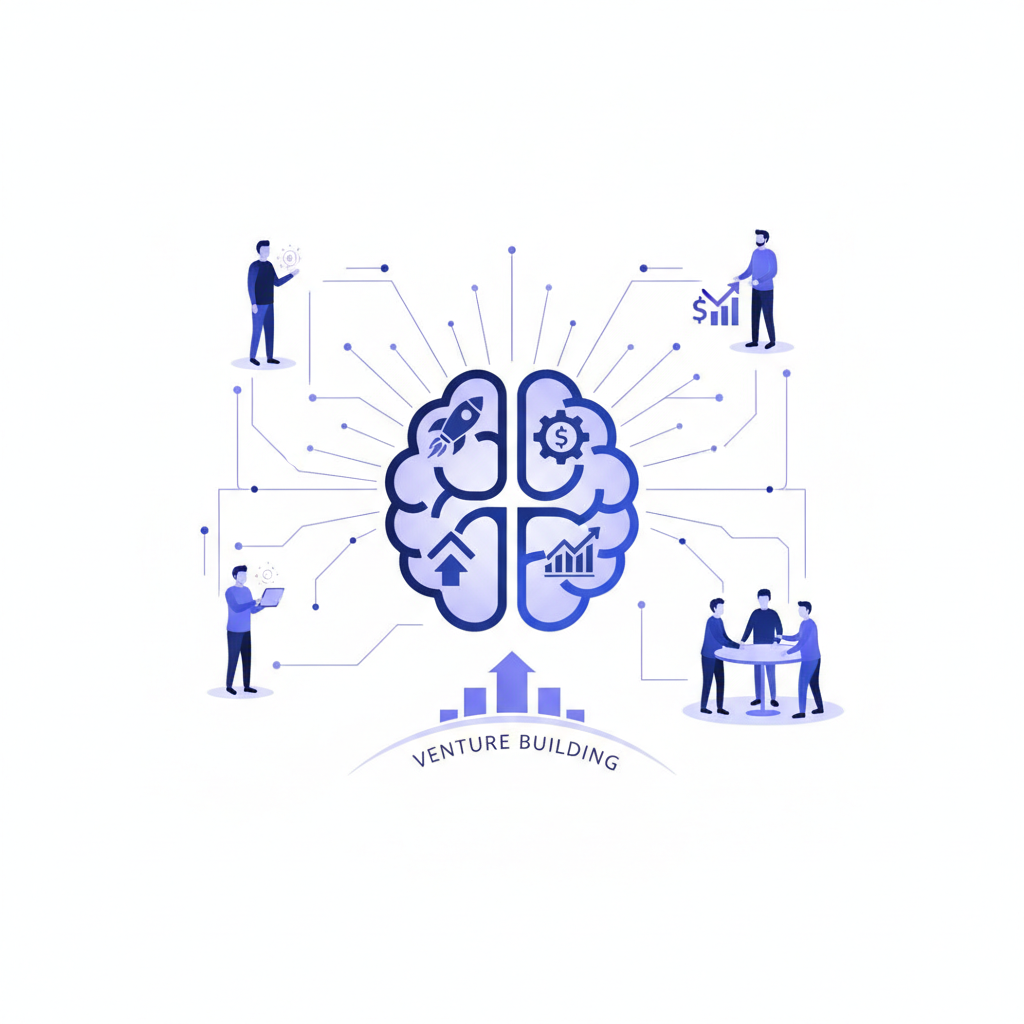
Starting a new venture is exhilarating. The allure of a nascent idea, the potential to disrupt industries, and the dream of building something impactful can be powerful motivators. However, the path from idea to sustainable business is fraught with peril. A significant percentage of startups fail not due to a lack of effort or capital, but because they build solutions for problems that don't exist, or for which customers aren't willing to pay. This fundamental mismatch, often called a lack of product-market fit, is a preventable yet common pitfall.
The critical first step for any aspiring founder is not to build, but to validate. Idea validation is the process of testing your core assumptions about your target customers, their problems, and your proposed solution's ability to address those problems effectively. It's about gathering evidence to determine if there's a real market need for your offering before you commit substantial time, money, and resources to development. This article will explore practical strategies for customer discovery, demand testing, and de-risking your venture, helping you build a solid foundation for sustainable growth.
The Cost of Unvalidated Assumptions
Many founders fall in love with their initial idea, operating under a set of assumptions that, while sometimes correct, are often deeply flawed. These assumptions typically revolve around:
- Problem Assumption: "People have this problem, and it's painful enough for them to seek a solution."
- Solution Assumption: "My solution will effectively solve their problem."
- Market Assumption: "There are enough people with this problem who will pay for my solution."
- Value Proposition Assumption: "My solution offers unique value that differentiates it from alternatives."
Building extensively based on these untested assumptions is like navigating a ship without a compass or map. You might eventually reach land, but it's more likely you'll drift aimlessly or run aground. The cost isn't just financial; it includes wasted time, lost opportunity, and diminished morale. Companies like Google, Amazon, and Microsoft didn't build their empires in a vacuum; they consistently iterated, gathered feedback, and adapted their offerings based on market signals. Even their most successful products underwent rigorous testing and evolution.
Phase 1: Customer Discovery – Understanding the Problem
Customer discovery is perhaps the most crucial stage of validation. It's about deeply understanding your potential customers, their world, their challenges, and how they currently cope with them. This isn't about selling your idea; it's about listening and learning.
The Art of the Customer Interview
Effective customer interviews are qualitative and open-ended. You're trying to uncover pain points, motivations, behaviors, and existing workarounds.
Key Principles for Interviews:
- Seek Problems, Not Solutions: Don't pitch your idea. Instead, ask about their experiences related to the problem area you're exploring. For example, instead of "Would you use an app that does X?" ask "Tell me about the last time you struggled with Y. How did you handle it?"
- Focus on Past Behavior: People are notoriously bad at predicting future behavior. Ask about what they have done, not what they would do. "How often did you encounter this problem last month?" is more insightful than "How often do you think you'd use a solution for this?"
- Identify Pain Points and Workarounds: Look for evidence of a significant, recurring problem. Do they spend time, money, or emotional energy trying to solve it? What are their current imperfect solutions?
- Listen More Than You Talk: Your goal is to gather information, not to convince. Aim for an 80/20 listen-to-talk ratio.
- Target the Right People: Interview individuals who genuinely represent your target customer segment.
Common Interview Mistakes to Avoid:
- Leading Questions: "Don't you agree that X is a big problem?" biases the answer.
- Asking Hypotheticals: "Would you pay for this?" is less reliable than observing actual commitment.
- Interviewing Friends/Family: They are often too polite and won't give critical feedback.
- Selling Too Early: Customer interviews are for learning, not sales.
Building Empathy Maps and Personas
After conducting 10-20 meaningful customer interviews, you'll start noticing patterns. Use this information to create:
- Empathy Maps: Visualizations that capture what your target customers
Say, Think, Do, and Feelregarding their problem and potential solutions. This reveals hidden needs and motivations. - Customer Personas: Fictional, generalized representations of your ideal customers based on qualitative and quantitative data. Include demographics, behaviors, motivations, and goals. Personas ensure your entire team remains focused on solving real customer problems.
By deeply understanding the problem from the customer's perspective, you can refine your initial hypothesis or, if necessary, pivot to a more compelling one.
Phase 2: Demand Testing – Validating the Solution and Value
Once you have a clear understanding of the problem space, the next step is to test potential solutions and gauge market demand. This doesn't require a fully built product.
Minimal Viable Product (MVP) and Concierge Testing
The concept of an MVP, popularized by Eric Ries in "The Lean Startup," is a version of a new product that allows a team to collect the maximum amount of validated learning about customers with the least amount of effort. An MVP isn't just a basic product; it's the smallest thing you can build to test your core value proposition.
- Paper Prototypes/Wireframes: Hand-drawn sketches or digital mockups can illustrate your solution's flow and functionality. Show these to potential users and observe their reactions, asking them to narrate their thoughts as they interact with the prototype.
- Landing Page Test: Create a simple landing page that describes your solution and its benefits. Include a clear call to action (e.g., "Sign Up for Early Access," "Join the Waitlist," "Pre-order Now"). Drive some traffic to it (e.g., via targeted social media ads) and measure conversion rates. A high sign-up rate indicates strong preliminary interest.
- Concierge MVP: Instead of building software, manually perform the service you intend your product to automate. For example, if you're building an AI-powered personal assistant, you could personally fulfill requests for a small number of early users. This allows you to learn intimately about the user experience and iterate quickly without code.
- Piecemeal MVP: Use existing tools and services to cobble together a solution. For example, if you're building a new SaaS platform, you might start by using Google Forms for data collection, email for communication, and a spreadsheet for data management, running it manually for early users.
Pricing Strategy and Willingness to Pay
Part of demand testing involves understanding if customers are willing to pay for your solution, and how much. This is a critical aspect of de-risking.
- Van Westendorp Price Sensitivity Meter: This survey-based method asks four questions to gauge price acceptability: "At what price would you consider the product to be so expensive that you would not consider buying it? (Too Expensive)," "At what price would you consider the product to be getting expensive, but you would still consider buying it? (Expensive/High Value)," "At what price would you consider the product to be a bargain—a great buy for the money? (Bargain/Good Value)," and "At what price would you consider the product to be so cheap that you would question its quality? (Too Cheap).". The intersections of these curves reveal optimal price ranges.
- Asking for Commitments: The most robust form of validation is getting people to put skin in the game. This could be a pre-order, a paid pilot, or even a letter of intent for B2B ventures. Money talks louder than words.
Phase 3: De-Risking Your Venture – Beyond Product-Market Fit
Validation extends beyond just understanding the problem and confirming initial demand. It also involves systematically identifying and mitigating other significant risks.
Technical Feasibility
For deep technology or complex solutions, technical feasibility is a major risk. Can your proposed solution actually be built? At what cost? With what resources?
- Proof of Concept (PoC): A small, internal project designed to verify that a certain concept or theory has the potential for real-world application. It addresses specific technical questions.
- Spikes: In agile development, a "spike" is a short, time-boxed research or exploration period to answer a technical question or gain knowledge necessary to reduce the risk of a technical approach.
Operational Feasibility
Can you deliver your solution consistently and at scale? What operational challenges might arise?
- Supply Chain Validation: If your product relies on physical components, validate suppliers, lead times, and costs early.
- Regulatory Compliance: For sectors like healthcare or fintech, understand the regulatory landscape and ensure your solution can comply without prohibitive costs or delays.
Team Validation
Is your founding team capable of executing the vision? Do you have the necessary skills, experience, and complementary strengths?
- Skills Gap Analysis: Identify critical skills needed for the initial phase and assess if your current team or network can provide them.
- Advisor Network: Bring in experienced advisors who can fill knowledge gaps and provide strategic guidance.
Key Takeaways for Founders
- Embrace Iteration: Validation is not a one-time event but an ongoing process of building, measuring, and learning.
- Be Data-Driven: Make decisions based on evidence and customer feedback, not just intuition.
- Prioritize Learning Over Building: Before writing a single line of code or designing a complex component, prove that there's a compelling reason to do so.
- Don't Fear the Pivot: If your initial idea doesn't validate, consider it a success because you learned early. A pivot based on evidence is a strategic move, not a failure.
Practical Recommendations:
- Define Your Core Hypothesis: Clearly articulate the problem you think exists, your proposed solution, and your target customer. This is what you'll test.
- Identify Key Assumptions: List out all the things that need to be true for your idea to succeed. These are the aspects you'll validate first.
- Design Small, Focused Experiments: For each assumption, create the cheapest, fastest way to test it (e.g., 5 customer interviews, a simple landing page, a paper prototype).
- Set Clear Success Criteria: Before running an experiment, decide what outcome would count as validation (e.g., "80% of interviewed users express this problem," "landing page conversion rate of 10% for leads").
- Record and Analyze Results Systematically: Don't just collect data; interpret it. What did you learn? What questions remain? How does this impact your initial hypothesis?
- Refine or Reject: Based on your findings, either refine your hypothesis and proceed to the next validation stage or, if evidence strongly suggests a lack of fit, consider a pivot or abandoning the idea.
By systematically validating your startup idea through customer discovery, demand testing, and continuous de-risking, you dramatically increase your chances of building a product or service that truly resonates with the market. This disciplined, evidence-based approach is the hallmark of successful venture building and leads to more sustainable, impactful companies.
How Synapses Ventures Can Help
Synapses Ventures partners with founders, researchers, entrepreneurs, and innovators to transform breakthrough ideas into scalable companies. Our venture-building approach emphasizes rigorous idea validation, strategic de-risking, and disciplined product development to ensure a strong foundation for growth. We provide hands-on guidance through customer discovery methodologies, demand testing frameworks, and the creation of impactful MVPs, helping founders identify true market needs before significant capital outlay. By collaborating on strategic planning, commercialization pathways, and access to a global network of experts and capital, Synapses Ventures helps innovators navigate the complexities of launching and scaling deep technology and healthcare ventures, turning pioneering research into market-ready solutions and sustainable businesses.