Deep Tech
Physical AI: Building Intelligent Systems in the Real World
For the past decade, the venture landscape has been dominated by digital intelligence: algorithms that process text, generate synthetic media, optimize advertising yields, and predict clicks. Yet the physical world—where humans live, move, manufacture, and heal—remains overwhelmingly analog.
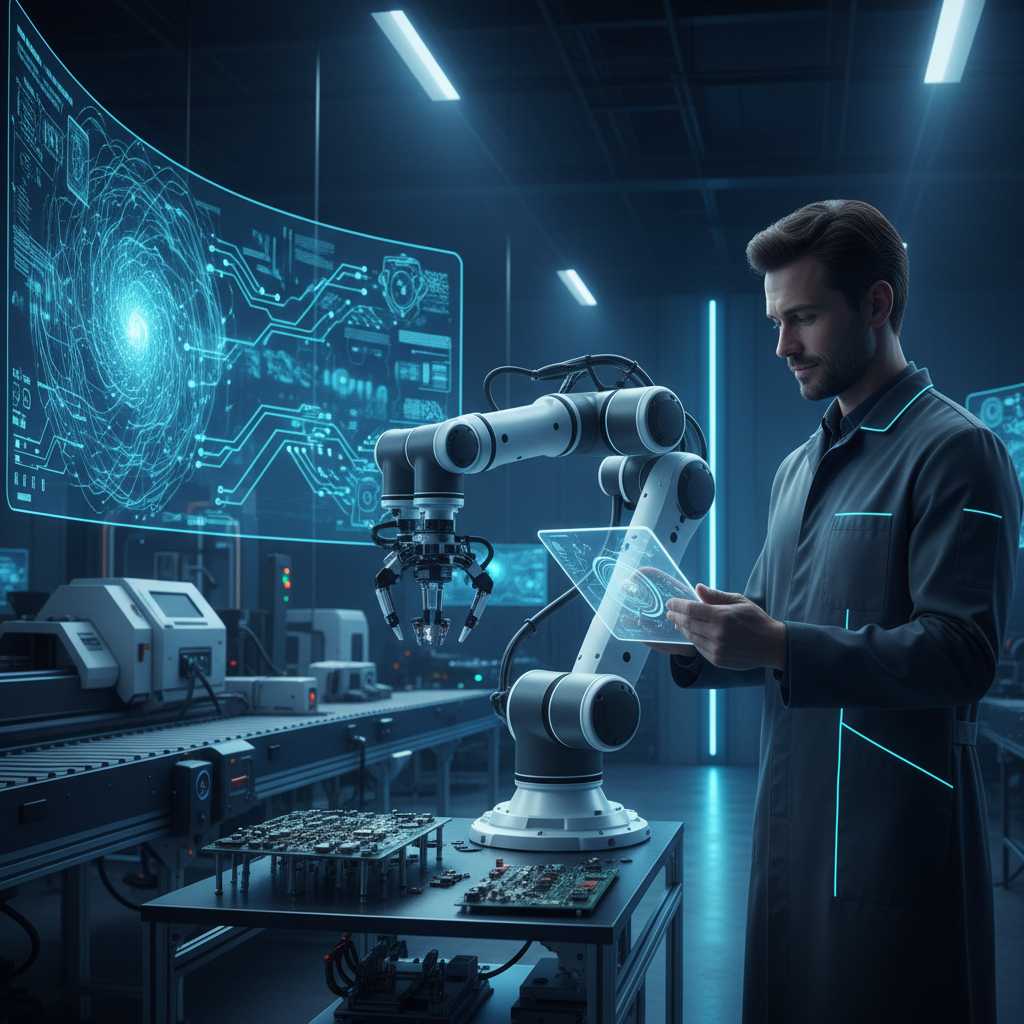
That balance is shifting rapidly. We are entering the era of physical AI: embodied intelligence where foundation models, computer vision, and real-time control loops interact directly with physical matter. Rather than generating text on a screen, physical AI navigates dynamic environments, manipulates fragile materials, guides industrial machinery, and coordinates automated logistics.
For founders, transitioning from pure software to physical AI requires an entirely different operational mental model. Code running in cloud data centers tolerates latency, restarts on failure, and scales elastically with compute instances. Software interacting with physical dynamics must obey friction, thermal constraints, gravity, and the non-negotiable law of safety.
Here is an actionable, founder-focused framework for navigating the commercial, technical, and architectural realities of building physical AI companies today.
Understanding the Shift from Digital to Embodied Intelligence
Digital AI models operate in closed, predictable information spaces. A large language model produces tokens based on linguistic probability; a recommendation engine optimizes rank-order lists. In contrast, physical AI operates under uncertainty, partial observability, and irreversible consequences.
When a physical agent misjudges an object’s mass, an industrial arm drops a payload, an autonomous vehicle encounters an edge case, or a surgical robotic system damages tissue.
Physical AI integrates three distinct disciplines into a unified architecture:
- High-Level Perception and Reasoning: Multimodal models that understand spatial context, recognize objects, and interpret environmental cues.
- Low-Level Motor Control and Actuation: Real-time feedback loops that compute torque, acceleration, and kinematic trajectories in milliseconds.
- Continuous State Estimation: Sensor fusion combining computer vision, LiDAR, inertial measurement units (IMUs), and tactile feedback to continuously determine the agent's exact physical state.
Founders who succeed in this domain do not simply take off-the-shelf digital models and attach them to robotic chassis. They rethink the relationship between compute, mechanical hardware, and environment from first principles.
The Physical AI Maturity Framework
To de-risk capital and operational complexity, founders should evaluate their system against the five stages of physical autonomy. Attempting to leap directly to full autonomy without validating intermediate feedback loops is the single most common reason deep tech ventures stall.
Level 1: Teleoperated Data Collection
The system is controlled remotely by human operators while sensors record multimodal data streams (vision, actuation forces, environmental states). The objective is not automation, but establishing high-fidelity training distributions.
Level 2: Shadow Mode and Predictive Assistance
Human operators still command the physical system, but machine learning models run passively in parallel, predicting human actions and identifying discrepancies between model inferences and human decisions.
Level 3: Bounded Task Execution
The system executes specific, repeatable micro-tasks autonomously within constrained, highly predictable boundaries (such as bin-picking uniform components or navigating static warehouse corridors). Human intervention occurs only on state exceptions.
Level 4: Closed-Loop Dynamic Adaptation
The machine senses changes in its immediate environment (such as unexpected obstacles, changing surface friction, or moving personnel) and adjusts its policy in real time without halting operations or requiring teleoperation.
Level 5: Generalizable Multitask Autonomy
The system executes unstructured workflows across diverse environments, utilizing zero-shot or few-shot physical problem solving without pre-programmed pathing or custom hardware retrofits.
Most commercially viable venture investments today operate between Levels 2 and 4. Founders must identify precisely which tier their minimum viable product requires before deploying capital into expensive physical manufacturing.
Navigating the Sim-to-Real Gap
Training models entirely on physical hardware is slow, cost-prohibitive, and dangerous. Training solely in simulation yields algorithms that fail catastrophically when introduced to real-world friction, lighting changes, and sensor noise. This divergence is known as the simulation-to-reality (sim-to-real) gap.
Leading engineering teams bridge this gap through three disciplined methodologies:
- Domain Randomization: Instead of attempting to create photorealistic and physics-perfect simulations, teams inject controlled variance into lighting, texture, mass, friction coefficients, and sensor latency during training. A model exposed to millions of chaotic simulated variations learns robust representations that translate far better to the real world.
- Differentiable Physics Engines: Modern simulation tools allow gradients to backpropagate through physical dynamics. This lets algorithms optimize control policies alongside physical parameters simultaneously, minimizing trial-and-error iterations on physical test benches.
- Hybrid Data Pipelines: Software architectures should pair massive synthetic simulation datasets with small, highly curated physical data samples collected from edge deployments. The synthetic data teaches broad geometric and kinematic understanding, while real-world data fine-tunes edge-case handling.
Common Mistakes Physical AI Founders Make
Building at the intersection of bits and atoms requires ruthless discipline. Venture-backed founders frequently stumble into predictable traps:
1. Designing Custom Hardware Too Early
Many engineering teams spend their initial pre-seed and seed rounds designing bespoke mechanical components, custom PCBs, and proprietary actuators. In the early stages, proprietary hardware is often an expensive distraction. Whenever possible, use standard modular hardware and focus your engineering talent on the perception, control, and data pipeline layers.
2. Underestimating the Cost of Real-World Data
In digital AI, internet-scale datasets are easily scraped or purchased. In physical AI, datasets must be physically collected, timestamped, calibrated across multiple sensors, cleaned, and labeled. Neglecting the logistical infrastructure needed to harvest real-world physical data results in dry pipelines and stalled performance curves.
3. Ignoring Edge Compute and Thermal Realities
A model that performs flawlessly on a cluster of liquid-cooled data center GPUs may prove unusable when deployed on an embedded system with strict 40-watt power limitations and ambient heat challenges. Optimize for inference latency, quantization, and compute constraints from day one.
4. Over-Indexing on End-to-End Deep Learning
While end-to-end learning (pixels-in, torques-out) is an inspiring research direction, enterprise customers demand explainability, safety bounds, and determinism. Hybrid architectures—combining deep learning for perception with deterministic physics controllers for actuation—are far easier to deploy, audit, and insure.
Five Actions Founders Can Take This Week
If you are building or planning a venture in physical AI, step away from complex hardware fabrication and execute these five practical priorities over the next seven days:
- Define Your Edge Compute Envelope: Document your operational compute ceiling. Determine maximum allowable weight, wattage, cost-per-unit, and thermal limits. Benchmark your current models against real embedded hardware (such as commercially available edge compute modules) rather than high-end cloud instances.
- Establish a Deterministic Safety Boundary: Implement a hard-coded, non-neural safety supervisor. Ensure that no matter what inference output your vision-language-action (VLA) model outputs, a deterministic rules engine validates velocity, clearance, and force limits before executing movement.
- Map the Sim-to-Real Transfer Ratio: Quantify how many hours of simulation your platform requires for every minute of physical operational data. If you are relying purely on physical collection, evaluate open-source simulation platforms to accelerate your feedback loops.
- Audit Sensor Redundancy and Drift: Test your edge sensors across suboptimal conditions. What happens to your state estimation when a camera lens collects dust, an ambient light flickers at 60Hz, or an IMU experiences thermal drift? Build graceful degradation into your system.
- Draft a Safety and Insurance Brief: Commercial customers rarely buy robots; they buy risk reduction, operational uptime, and labor efficiency. Meet with an industry compliance advisor or risk officer to evaluate what safety certifications (such as ISO or CE standards) will be required before your pilot can go live.
The Strategic Horizon
The companies that define the next decade of deep technology will not be those that simply generate faster text responses or more convincing synthetic imagery. They will be the ventures that apply foundational intelligence to agriculture, cold-chain distribution, robotic surgery, advanced manufacturing, and renewable infrastructure.
Physical AI bridges the computational breakthroughs of Silicon Valley with the tangible requirements of global industry. Founders who respect the laws of physics as deeply as the laws of computer science are uniquely positioned to build generational enterprises.
How Synapses Ventures Can Help
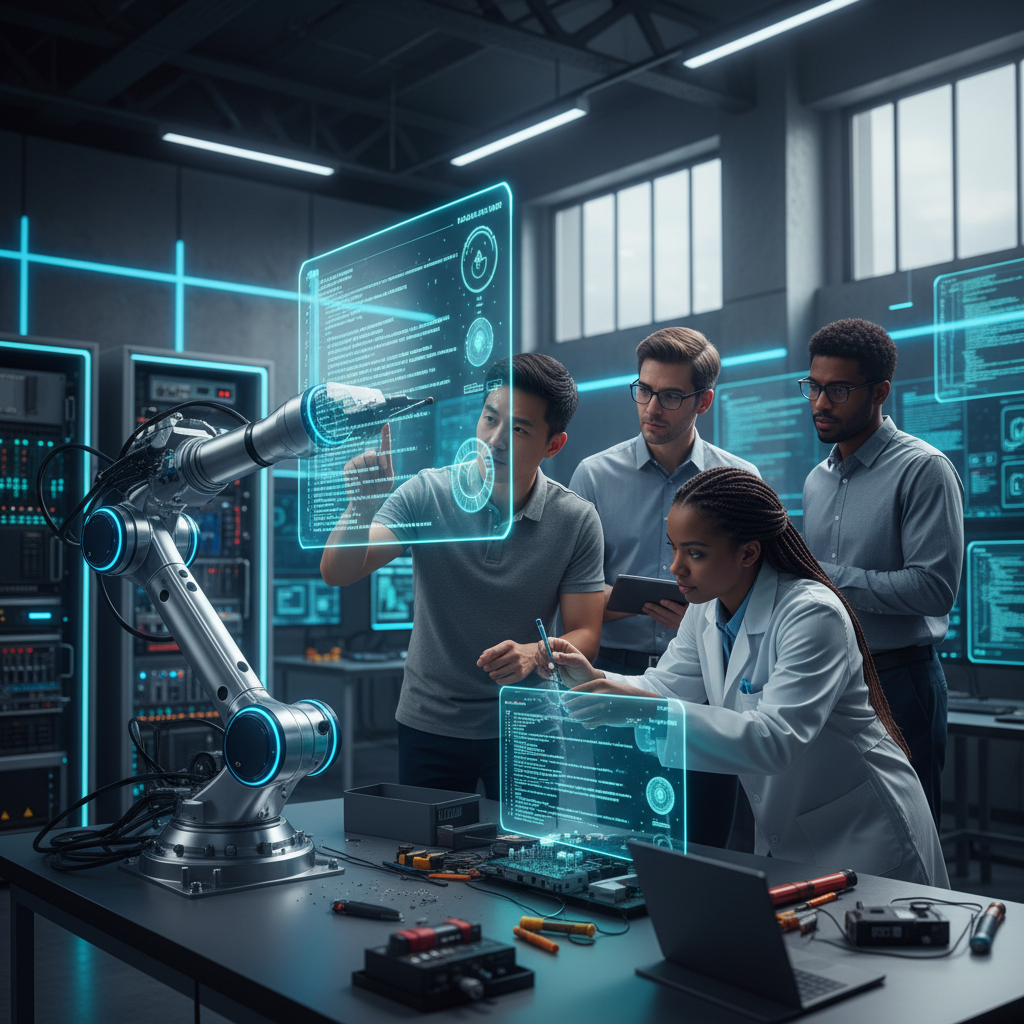
Transforming an advanced physical AI concept into a viable, market-leading enterprise requires more than software engineering. It demands disciplined hardware-software co-design, specialized supply chain navigation, scalable data collection infrastructure, and commercial validation with industry partners.
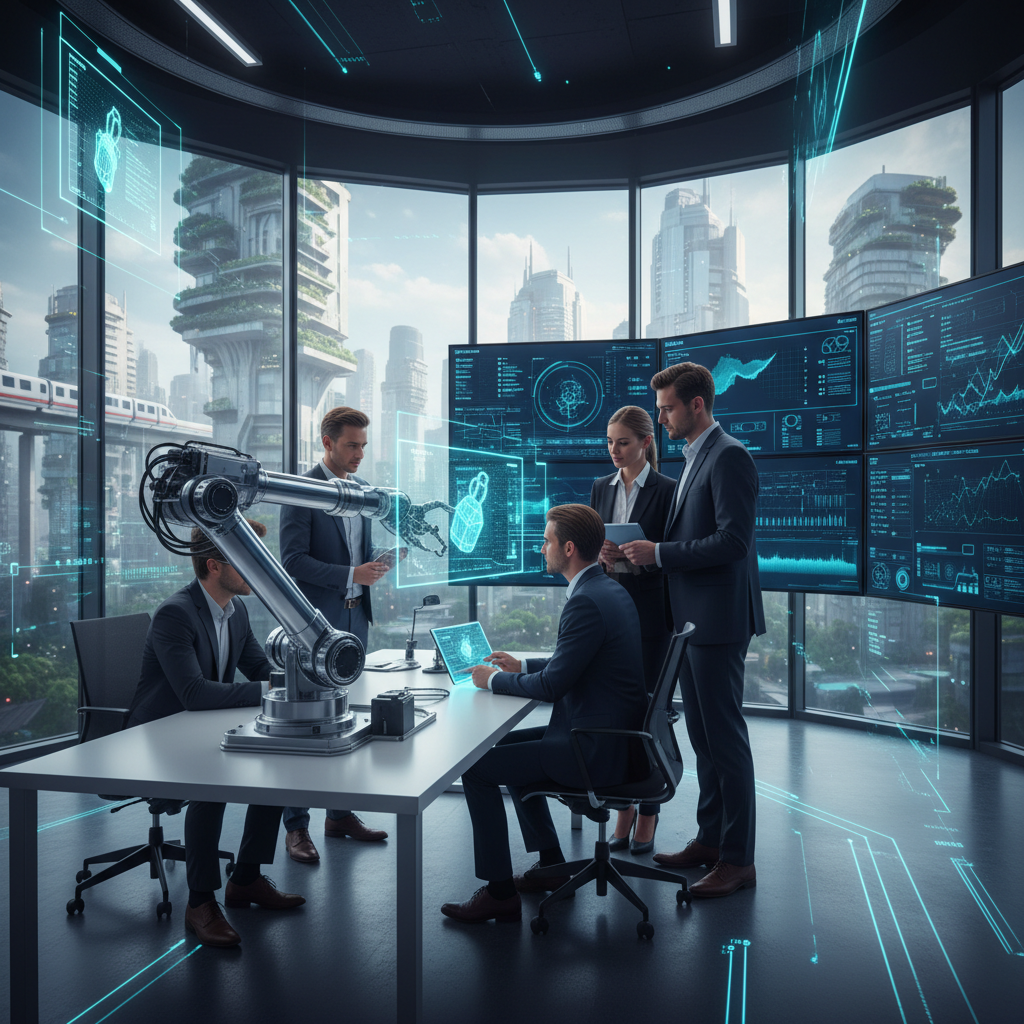
Synapses Ventures partners with visionary founders, academic researchers, and deep tech innovators at the earliest stages of company formation. Through our venture-building platform, we provide hands-on strategic guidance, technical architecture evaluation, talent sourcing, and commercialization pathways.
Whether you are transitioning a robotics lab breakthrough into a standalone venture or scaling an embodied intelligence platform to enterprise deployment, Synapses Ventures delivers the institutional insight, access to capital, and global network necessary to turn foundational science into enduring companies.
Share this article
Physical AI: Building Intelligent Systems in the Real World

As artificial intelligence moves from browser tabs into machines and physical environments, founders face a new paradigm of engineering and venture creation.

Inside the piece:
• What actually moves the needle for early-stage founders
• How we apply it across the Synapses venture portfolio
• The practical next step you can take this week

Read the full article → https://synapsesventures.com/s/physical-ai-building-intelligent-systems

#SynapsesVentures #DeepTech #FrontierTech #RnD