Deep Tech
Decoding Physical AI: Building Intelligent Systems in the Real World

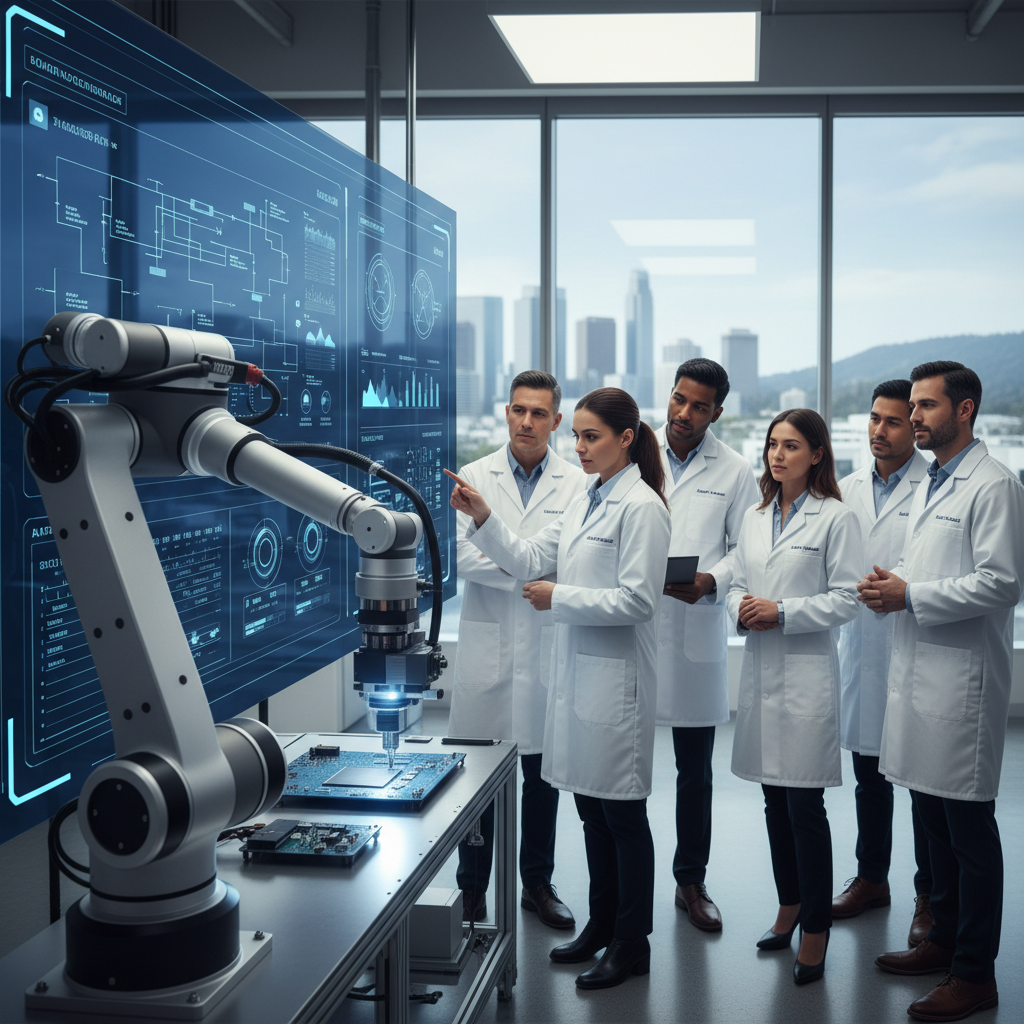
The AI revolution is often discussed in terms of large language models, computer vision, and predictive analytics operating within the digital realm. However, a significant frontier — and arguably one with the most transformative potential — lies in Physical AI. This domain involves intelligent systems that interact directly with the physical world, sensing their environment, processing information, making decisions, and executing actions through robotic mechanisms, sensors, and actuators.
From autonomous vehicles navigating complex cityscapes to sophisticated robotic arms assembling precision components, and smart infrastructure managing energy grids, Physical AI is moving artificial intelligence beyond screens and into tangible, operational reality. This shift introduces a distinct set of challenges and opportunities for founders, demanding a holistic approach that integrates cutting-edge AI software with robust, reliable hardware.
For entrepreneurs venturing into this space, understanding the nuances of Physical AI is paramount. It’s not merely about applying an algorithm; it's about engineering a seamless interaction between computation and physicality, where the robustness of the hardware is as critical as the intelligence of the software. This article delves into the core tenets of Physical AI, offering strategic insights and practical frameworks for founders navigating this complex, yet profoundly impactful, technological domain.
The Dual Challenge: Hardware and Software Synergy
The fundamental distinction of Physical AI lies in its inherent duality: the tight coupling of software intelligence with physical hardware. Unlike pure software ventures, a Physical AI company must master both disciplines, ensuring that the AI can effectively perceive, interpret, and act upon its physical environment, and that the hardware can reliably execute those actions.
This duality presents a multi-faceted challenge:
- Hardware Design and Reliability: The physical components — sensors, actuators, chassis, power systems — must be engineered for durability, precision, and longevity in diverse operating conditions. This requires deep expertise in mechanical engineering, electrical engineering, materials science, and industrial design. Fault tolerance and redundancy are not luxuries but necessities, especially in safety-critical applications.
- Edge Computing and Real-time Processing: Physical AI systems often operate where cloud connectivity is intermittent or where latency is unacceptable. This necessitates robust edge computing capabilities, allowing AI models to run locally on the device, making real-time decisions without relying on constant cloud communication. Optimizing models for resource-constrained hardware is a critical skill.
- Sensor Fusion and Data Interpretation: Physical AI systems gather data from a multitude of sensors (LIDAR, radar, cameras, accelerometers, microphones, etc.). Fusing this diverse data into a coherent, real-time understanding of the environment is complex. The AI must be able to filter noise, handle missing data, and make robust interpretations under varying conditions.
- Action and Control: Translating AI decisions into precise physical actions requires sophisticated control systems. This involves understanding motor control, kinematics, dynamics, and feedback loops to ensure the robot or device moves as intended, safely and efficiently.
- Safety and Human Interaction: Many Physical AI systems operate in environments shared with humans. Designing for safety, predictability, and intuitive human-robot interaction is non-negotiable. This involves rigorous testing, fail-safe mechanisms, and clear communication protocols.
Founders must recognize that failure in either the hardware or software component can lead to complete system failure, making the integration challenge far more significant than in purely digital products.
Data in the Physical World: Acquisition, Labeling, and Simulation
Data remains the lifeblood of AI, but in the physical world, its acquisition and utilization take on new dimensions. Unlike readily available digital datasets, physical data is often bespoke, complex, and expensive to gather.
Challenges in Physical AI Data:
- High Cost of Acquisition: Collecting real-world operational data from robots or autonomous systems is resource-intensive, requiring specialized equipment, controlled environments, and significant operational hours.
- Variability and Edge Cases: The physical world is inherently unpredictable. Capturing all possible scenarios, anomalies, and edge cases is exceedingly difficult, yet crucial for robust AI performance.
- Annotation Complexity: Labeling physical data (e.g., semantic segmentation for perception, action trajectories for reinforcement learning) often requires specialized human expertise and can be time-consuming and expensive.
Strategic Approaches for Data:
- Simulation-First Development: High-fidelity simulation environments are indispensable. They allow for rapid iteration, testing of edge cases, and generation of vast amounts of synthetic data that can pre-train AI models before real-world deployment. Companies like NVIDIA are investing heavily in platforms like Omniverse to facilitate this.
- Active Learning and Reinforcement Learning: Instead of purely supervised learning, Physical AI benefits greatly from active learning, where the system identifies data points it's uncertain about and requests human labels, or reinforcement learning, where it learns through trial and error within a defined environment (often a simulation first).
- Transfer Learning and Domain Adaptation: Leveraging pre-trained models from related domains and adapting them to specific physical environments can significantly reduce data requirements. This is particularly useful for tasks like object recognition or basic navigation.
- Hybrid Data Strategies: Combining real-world data with synthetic data, and using techniques like domain randomization in simulations, can create more generalized and robust models.
Founders should view data not just as an input but as a strategic asset, investing in robust data pipelines, annotation tools, and simulation capabilities from day one.
Commercialization Pathways and Market Entry
Bringing Physical AI products to market involves distinct considerations beyond typical software-as-a-service (SaaS) models. The capital intensity, regulatory landscape, and customer adoption cycles are often more demanding.
Key Commercialization Factors:
- Capital Intensity: Developing and manufacturing physical products requires significant upfront investment in R&D, tooling, manufacturing facilities, and inventory. This often necessitates substantial venture capital or strategic partnerships.
- Regulatory and Certification Hurdles: Industries like automotive, healthcare, aerospace, and critical infrastructure have stringent safety standards and regulatory approvals. Navigating these can be a protracted and costly process.
- Pilot Programs and Gradual Rollouts: Rather than immediate widespread deployment, Physical AI products often benefit from phased rollouts, starting with pilot programs with early adopters. This allows for real-world testing, data collection, and refinement in controlled environments.
- Service-Oriented Models: Many Physical AI solutions are sold as a service (e.g., Robotics-as-a-Service, Autonomous Mobility-as-a-Service), bundling hardware, software, maintenance, and upgrades into a subscription. This can lower customer adoption barriers and create recurring revenue streams.
- Strategic Partnerships: Collaborating with established industry players can provide access to manufacturing expertise, distribution channels, customer bases, and critical infrastructure. For example, a startup developing autonomous delivery robots might partner with a logistics company.
Practical Market Entry Framework:
- Identify a 'Pain Point' Niche: Start with a highly specific, high-value problem that current solutions fail to address adequately. Focus on one industry or application where the value proposition of Physical AI is undeniably clear (e.g., hazardous inspections, precision agriculture, last-mile logistics in contained environments).
- Minimum Viable Product (MVP) with a Clear Value Prop: Develop an MVP that demonstrates core functionality and delivers measurable value, even if limited in scope. Avoid feature creep; focus on the essential capability that solves the identified pain point.
- Prove Safety and Reliability Early: For Physical AI, trust is paramount. Early pilots and demonstrations must prioritize safety and demonstrate reliable, consistent performance in the intended environment. This builds confidence with potential customers and regulators.
- Scalability Plan for Hardware and Software: From the outset, consider how to scale both the physical production and the software deployment. This includes supply chain management, modular hardware design, and cloud-based AI model management.
- Build a Cross-Functional Team: Success in Physical AI demands a team with diverse expertise: AI/ML engineers, robotics engineers, mechanical engineers, electrical engineers, and experts in the target industry.
Common Pitfalls and How to Avoid Them
Founders in the Physical AI space often encounter unique challenges that can derail even promising ventures. Understanding these pitfalls is the first step toward mitigating them.
- Underestimating Hardware Complexity and Costs: Founders from pure software backgrounds often underestimate the lead times, capital expenditure, and iterative development cycles involved in hardware. Manufacturing, supply chain, and certification add layers of complexity. Mitigation: Engage hardware experts early, build robust financial models, and consider modular designs or off-the-shelf components where possible.
- Ignoring the 'Last Mile' Problem: Getting an AI model to work perfectly in a lab setting is one thing; deploying it robustly in unpredictable real-world environments is another. The 'last mile' of deployment often uncovers myriad edge cases and environmental variables not captured during development. Mitigation: Prioritize real-world testing from early stages, embrace simulation for edge case generation, and build robust error handling and continuous learning mechanisms.
- Neglecting Safety and Regulatory Compliance: Rushing to market without sufficient attention to safety protocols, ethical implications, and regulatory requirements can lead to severe consequences, including product recalls, legal issues, and irreparable brand damage. Mitigation: Integrate safety-by-design principles, engage with regulators early, and invest in comprehensive testing and certification processes.
- Lack of a Clear Value Proposition for the Physical Component: If the intelligent aspect can be delivered purely through software, or if the hardware doesn't provide a significant, defensible advantage, the physical product adds unnecessary cost and complexity. Mitigation: Articulate precisely why a physical embodiment is essential for solving the customer's problem and what unique value it unlocks.
- Difficulty in Data Collection and Annotation at Scale: As discussed, acquiring relevant and diverse data for Physical AI can be a bottleneck. If this challenge isn't addressed strategically, model performance will stagnate. Mitigation: Invest in data infrastructure, explore synthetic data generation, and design systems for active learning and efficient human-in-the-loop annotation.
The Path Forward for Physical AI Founders
The convergence of advanced AI algorithms, increasingly sophisticated hardware, and evolving sensor technologies is setting the stage for an era where intelligent systems seamlessly augment and automate tasks in our physical world. For founders, the opportunity is immense, but so is the complexity.
Success in Physical AI hinges on a multidisciplinary approach, blending deep expertise in AI/ML with robust engineering across mechanical, electrical, and control systems. It requires a pragmatic understanding of capital allocation, a strategic approach to data, and an unwavering commitment to safety and reliability.
Founders who can master this intricate interplay – who can translate groundbreaking AI research into tangible, reliable, and safe physical products that solve real-world problems – will be at the forefront of the next wave of technological innovation. The journey is challenging, but the potential for impact is truly transformative.
How Synapses Ventures Can Help
Synapses Ventures partners with founders, researchers, entrepreneurs, and innovators to transform breakthrough ideas in deep technology, including Physical AI, into scalable ventures. We understand the unique complexities involved in bringing intelligent physical systems to market, from the intricate challenges of hardware-software integration to navigating regulatory landscapes and securing specialized talent.
Our venture building approach provides strategic guidance and operational support that goes beyond traditional funding. We assist with product development methodologies tailored for hardware-AI convergence, develop robust commercialization strategies, and help build resilient supply chains. Through our extensive network, we provide access to critical expertise, potential strategic partners, and follow-on capital to help de-risk and accelerate the development and deployment of your Physical AI innovations, ensuring they move from concept to impactful reality.
Share this article
Decoding Physical AI: Building Intelligent Systems in the Real World

Physical AI transcends theoretical models, embedding intelligence directly into real-world systems that sense, act, and learn.

Inside the piece:
• What actually moves the needle for early-stage founders
• How we apply it across the Synapses venture portfolio
• The practical next step you can take this week

Read the full article → https://synapsesventures.com/s/decoding-physical-ai-building-intelligent-systems-in-the-real-world

#SynapsesVentures #DeepTech #FrontierTech #RnD