
Deep Tech
Navigating the Frontier of Physical AI: A Founder's Guide
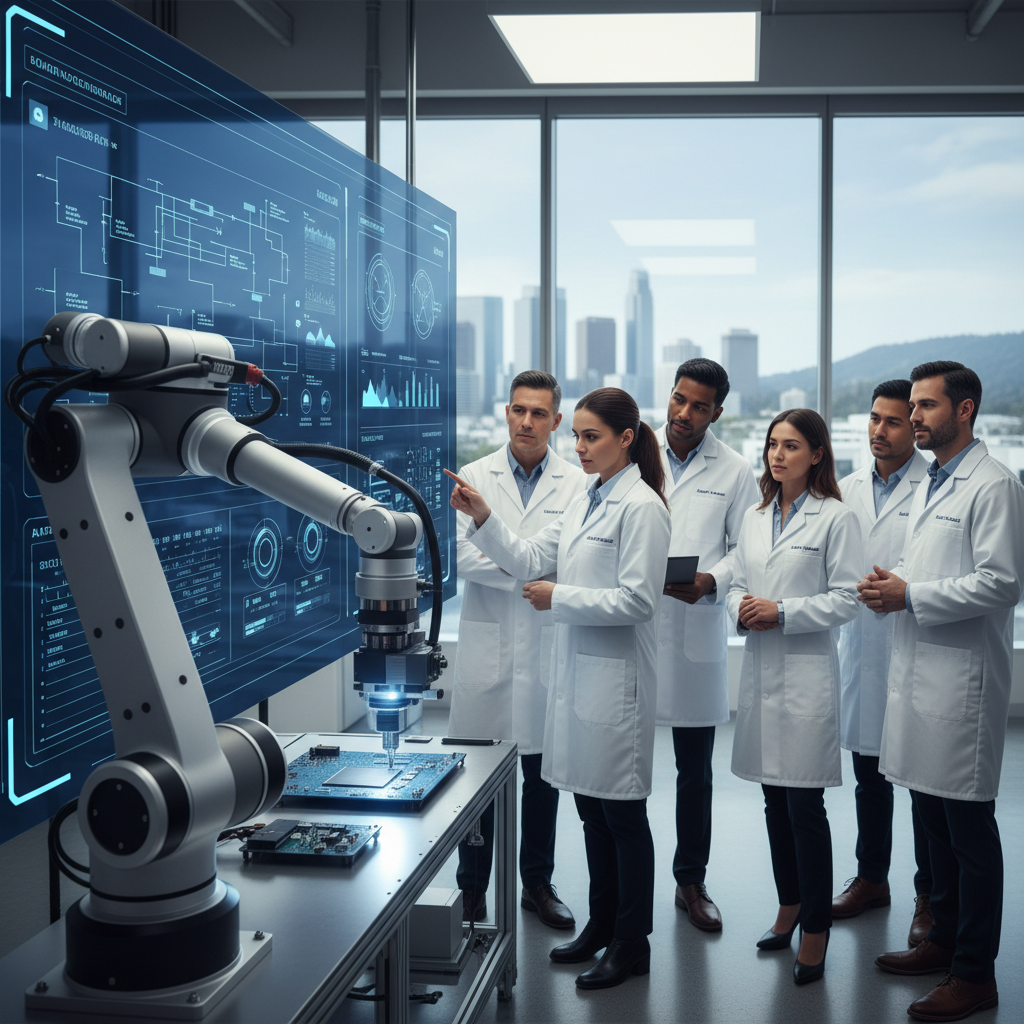
The artificial intelligence revolution has largely played out in the digital realm, transforming software, data analytics, and user interfaces. However, a parallel and equally profound evolution is underway: the emergence of Physical AI. This domain extends AI beyond screens and servers, embedding intelligent capabilities into physical systems that interact with the real world – robots, autonomous vehicles, smart infrastructure, and advanced manufacturing systems. For founders, Physical AI represents a frontier of immense opportunity, but also distinct challenges that demand a unique strategic playbook.
While traditional AI focuses on processing information, Physical AI is about action. It’s about perception, planning, and execution within dynamic, often unpredictable physical environments. This shift from virtual to tangible introduces complexities in hardware integration, safety, reliability, and regulatory compliance that are fundamentally different from purely software-driven innovation. Understanding these nuances is critical for building enduring, impactful companies in this nascent space.
Defining Physical AI: Beyond the Algorithm
Physical AI encompasses systems that leverage AI algorithms to perceive, reason, and act in the physical world. It's the intelligent arm of robotics, the brain of autonomous systems, and the adaptive core of smart industrial machinery. Unlike an algorithm classifying images on a server, a physical AI system might be a robotic arm welding intricate parts, a drone inspecting infrastructure, or an autonomous delivery vehicle navigating urban streets. The 'physical' aspect introduces several layers of complexity:
- Perception: Using sensors (cameras, LiDAR, radar, haptics) to understand the real world.
- Reasoning and Planning: AI algorithms interpreting sensor data, predicting outcomes, and formulating actions.
- Actuation: Physical mechanisms (motors, grippers, locomotion systems) executing those actions.
- Feedback Loops: Continuous sensor input informing subsequent actions, enabling adaptation and learning.
Consider the difference between a large language model and an autonomous robot. Both use sophisticated AI. However, the LLM operates within defined digital parameters, while the robot must contend with friction, gravity, unexpected obstacles, power constraints, and real-time sensory input in an unstructured environment. This tangible interaction is where Physical AI truly differentiates itself.
Founders in this space are not just building software; they are designing holistic systems where hardware, software, and real-world physics are inextricably linked.
The Unique Challenges of Physical AI Ventures
Building a Physical AI company requires navigating a landscape fraught with unique technical, operational, and commercial hurdles. Ignoring these early can lead to significant delays, cost overruns, or even product failure.
- Hardware-Software Integration: This is often the most significant challenge. Unlike pure software plays, Physical AI demands seamless synergy between custom hardware (sensors, actuators, processing units) and sophisticated AI software. Iteration cycles are slower and more expensive, as changes in one often necessitate changes in the other. Prototyping is costly, and scaling manufacturing adds layers of complexity that software companies rarely encounter.
- Safety and Reliability: Physical AI systems operate in environments where failure can have real-world consequences, from property damage to human injury. This necessitates rigorous testing, redundancy, robust error handling, and often, regulatory approval – processes that are time-consuming and expensive.
- Data Collection and Annotation for Real-World Environments: Training AI models for physical systems requires vast amounts of data that accurately reflect real-world variability and edge cases. Collecting this data can be expensive, hazardous, and difficult, especially for rare events. Annotation for physical tasks (e.g., precise object manipulation in 3D space) is also more complex than for digital data.
- Operational Complexity and Deployment: Deploying physical systems involves logistics, maintenance, integration with existing infrastructure, and often on-site technical support. It's not simply pushing an update to the cloud; it's managing a fleet of intelligent assets in diverse locations.
- Regulatory and Ethical Hurdles: Depending on the application (e.g., healthcare robotics, autonomous driving, defense), Physical AI systems face stringent regulations, compliance standards, and ethical considerations around autonomy, accountability, and privacy. Navigating these requires deep domain expertise and proactive engagement with policymakers.
Strategic Frameworks for Physical AI Founders
To overcome these challenges, founders need a methodical and strategic approach. Here are several frameworks and considerations to guide your journey:
1. The Full-Stack vs. Component Play Decision
One of the earliest and most critical strategic decisions for a Physical AI startup is whether to build a full-stack solution (hardware + software + services) or focus on a specific component (e.g., advanced sensors, specialized AI algorithms for motion control, specific middleware).
- Full-Stack Advantage: Greater control over the user experience, potential for higher margins, and quicker iteration across the entire system. Can create a stronger moat if executed well. Example: Tesla's approach to autonomous vehicles integrating hardware, software, and charging infrastructure.
- Full-Stack Disadvantage: Enormous capital requirements, extended development cycles, diverse skill sets needed (hardware engineering, software AI, manufacturing, field operations), and higher risk profile.
- Component Play Advantage: Lower capital intensity, faster time-to-market for a specific solution, potential to integrate into a wider ecosystem, and leverage existing hardware platforms. Example: NVIDIA's focus on specialized AI processors for various applications, including robotics.
- Component Play Disadvantage: Dependent on the success of larger full-stack integrators, commoditization risk, and potentially lower margins over time.
Actionable Advice: Start with a component focus if capital is constrained or if a clear market need exists for a highly differentiated module. Consider expanding to full-stack only after proving core technology and securing substantial funding. Always assess the ecosystem: are there viable partners for the parts you don't want to build?
2. The "First Use Case" Imperative
Unlike software, where a broad beta can sometimes suffice, Physical AI often demands a highly specific, high-value first use case. Attempting to build a general-purpose physical AI solution from day one is a recipe for failure. Focus intently on solving one critical pain point for one specific customer segment.
Framework: The 3 P's of First Use Case Selection
- Pain Point: Is the problem acute and costly enough that customers will pay a premium for an automated solution? Quantify the operational savings, safety improvements, or efficiency gains.
- Practicality: Is the environment structured enough, and the variables limited enough, for your initial system to succeed reliably? Avoid highly unstructured or dangerous environments for your first deployment.
- Payback Period: Can your solution demonstrate a clear, quantifiable ROI for the customer within a reasonable timeframe? This is crucial for sales and adoption.
Example: Instead of building a robot that can do 'anything' in a factory, build one that can precisely pick and place one specific component for one type of assembly line, significantly reducing repetitive strain injuries or improving throughput accuracy. Expand from there.
3. Iteration Loops: Bridging Digital and Physical
Rapid iteration is a hallmark of successful software development. In Physical AI, this is complicated by hardware. To accelerate development:
- Simulation First: Develop and test AI algorithms extensively in high-fidelity simulations before deploying to physical hardware. This reduces hardware wear-and-tear, speeds up testing, and allows for exploring edge cases safely. Tools like NVIDIA Omniverse are increasingly vital here.
- Modular Design: Design both hardware and software components to be modular. This allows for independent development, testing, and upgrade paths, minimizing the ripple effect of changes.
- Data Flywheels: Implement robust data logging and analysis from physical deployments. This real-world data fuels improvements in your AI models, creating a virtuous cycle (the 'data flywheel'). Ensure your systems are designed to collect relevant sensor data and operational feedback efficiently.
Actionable Advice: Invest heavily in your simulation environment from day one. Treat your data collection and analysis pipeline as a core product feature, not an afterthought. Instrument your hardware extensively to understand performance bottlenecks in real-world scenarios.
Common Pitfalls and How to Avoid Them
- Underestimating Hardware Development: Hardware takes longer, costs more, and is harder to change than software. Don't assume a software-first mindset will translate. Plan for longer development cycles, higher prototyping costs, and dedicated hardware engineering expertise.
- Ignoring Real-World Variability: Lab conditions are rarely representative of actual deployment environments. Neglecting factors like dust, temperature fluctuations, network latency, or unpredictable human interaction will lead to system failures in the field. Test extensively in target environments.
- Premature Scaling: Attempting to scale manufacturing or deployment before achieving robust proof-of-concept in a controlled environment is a common mistake. Master one customer, one use case, one environment first.
- Neglecting Safety and Certification: Proactively engage with safety standards (e.g., ISO, IEC) and regulatory bodies. Retrofitting safety features or seeking certification late in the process is extraordinarily expensive and time-consuming.
- Lack of Domain Expertise: Physical AI often requires deep knowledge of the specific industry it's serving (e.g., manufacturing processes, healthcare workflows, agricultural practices). Build a team with both AI expertise and relevant domain knowledge to understand true customer needs and operational constraints.
The Path Forward: Actionable Steps This Week
For founders embarking on a Physical AI journey, immediate action is paramount. Here are steps you can take to refine your strategy:
- Validate Your Pain Point (Again): Conduct at least five in-depth interviews with potential customers this week. Focus on quantifying the economic impact of the problem you're solving. How much money, time, or risk does it cost them today? Use these insights to refine your initial use case.
- Map Your Technical Stack: Create a detailed diagram of your proposed hardware and software architecture. Identify every custom component vs. off-the-shelf solution. Pinpoint areas of highest technical risk and begin researching potential mitigation strategies or alternative approaches.
- Research Regulatory Landscapes: For your specific target industry and geography, identify the key regulatory bodies, safety standards, and certification processes that will apply to your physical AI system. Begin to understand the timeline and cost implications.
- Connect with Hardware/Manufacturing Experts: If you're a software-heavy team, seek out advisors or potential hires with deep experience in hardware design, manufacturing, supply chain, and field deployment. Their insights are invaluable for anticipating challenges.
- Build a Low-Fidelity Physical Prototype: Even if it's rudimentary, get your AI system interacting with something physical. This could be a small robot kit, a simple sensor array, or a 3D-printed component. The goal is to start uncovering real-world interaction challenges early.
Physical AI is not merely an extension of software AI; it is a new paradigm that merges the digital and the tangible. Founders who grasp its unique demands and build strategies around rigorous system integration, safety, and focused problem-solving will be those who construct the foundational companies of the next industrial era.
How Synapses Ventures Can Help
Synapses Ventures partners with founders, researchers, entrepreneurs, and innovators who are transforming breakthrough ideas into scalable companies. Our venture building platform provides strategic guidance, product development expertise, and access to capital and global networks to navigate the complex landscape of deep technology and physical AI commercialization. We work closely with teams to de-risk ambitious concepts, develop robust go-to-market strategies, and secure the resources needed to build enduring ventures that make a tangible impact in the real world.
Share this article
Navigating the Frontier of Physical AI: A Founder's Guide

Physical AI, where intelligence meets the tangible world, is redefining industries from manufacturing to healthcare.

Inside the piece:
• What actually moves the needle for early-stage founders
• How we apply it across the Synapses venture portfolio
• The practical next step you can take this week

Read the full article → https://synapsesventures.com/s/navigating-frontier-physical-ai-founders-guide-3

#SynapsesVentures #DeepTech #FrontierTech #RnD