Artificial Intelligence
Unlocking the Potential of Physical AI: A Founder's Guide

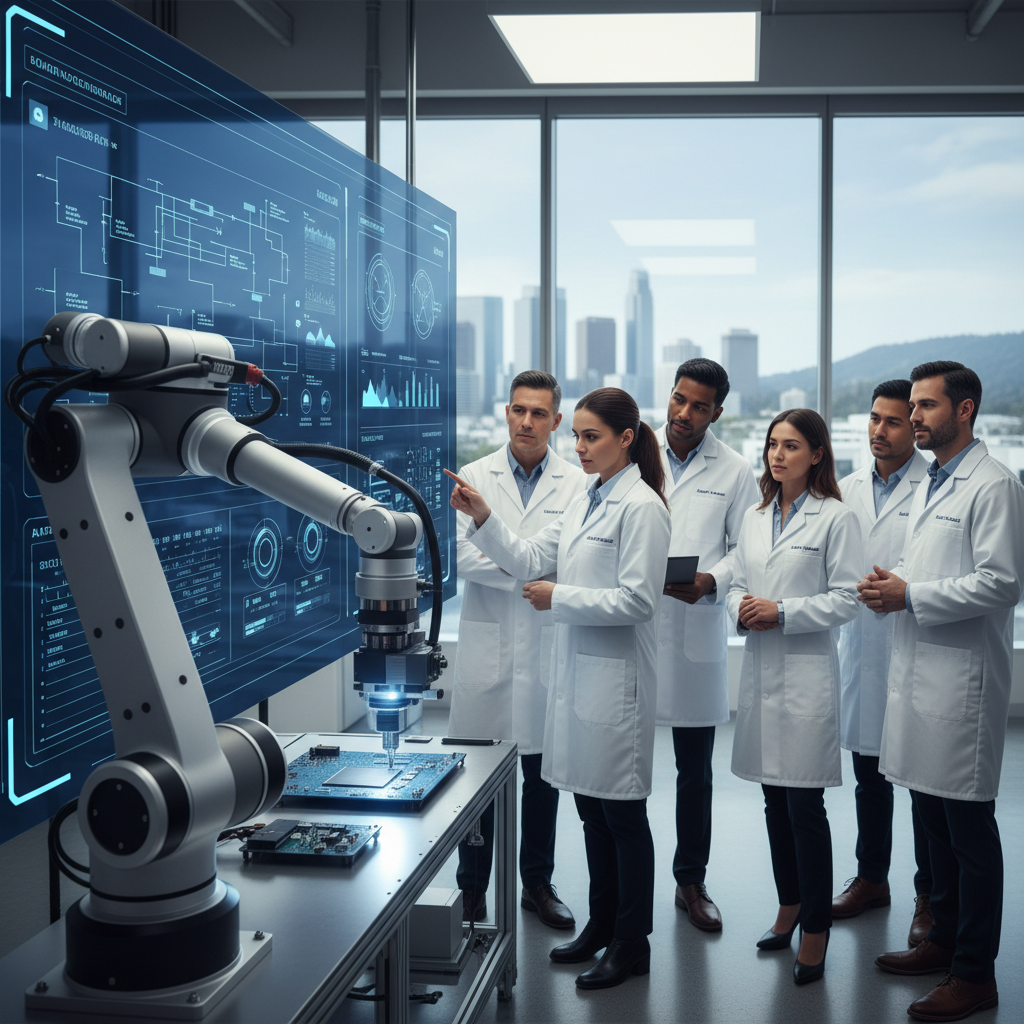
The narrative around Artificial Intelligence often centers on algorithms, data centers, and digital interfaces. While Large Language Models and generative AI capture headlines, an equally transformative, yet often less discussed, frontier is rapidly expanding: Physical AI. This domain integrates intelligent algorithms with physical systems, enabling machines to perceive, reason, and act in the real world. Think beyond the virtual; imagine autonomous robots in manufacturing, intelligent drones inspecting infrastructure, or self-driving vehicles navigating complex environments. This isn't just about automation; it's about intelligent autonomy, where machines learn, adapt, and perform complex tasks with unprecedented precision and efficiency.
For founders, Physical AI represents a profound opportunity to solve real-world problems with tangible impact. However, it also presents a unique set of challenges that differ significantly from purely software-based ventures. Navigating the convergence of hardware, software, and deep technology requires a strategic framework and a founder-first mindset. This guide outlines key considerations, common pitfalls, and actionable strategies for building robust and scalable Physical AI companies.
Understanding the Landscape of Physical AI
Physical AI encompasses a broad spectrum of technologies and applications. At its core, it's about intelligent agents interacting with and manipulating their environment. This interaction typically involves a tightly coupled system of sensors for perception, processing units for decision-making (often at the edge), and actuators for physical action. The intelligence can range from reactive control systems to advanced deep learning models enabling complex reasoning and adaptation.
Key sub-domains and applications include:
- Robotics: Industrial automation, collaborative robots (cobots), service robots, surgical robots, logistics automation.
- Autonomous Systems: Self-driving cars, drones for inspection and delivery, autonomous agricultural machinery, underwater vehicles.
- Smart Infrastructure: Intelligent sensors for predictive maintenance, adaptive traffic management, smart grids.
- Wearable AI: Advanced prosthetics, exoskeletons, health monitoring devices with embedded intelligence.
What sets Physical AI apart is the inherent complexity of integrating disparate engineering disciplines – mechanical, electrical, software, and AI – into a cohesive, reliable, and safe system. The move fast and break things ethos often applicable to pure software development finds significant limitations here; hardware iterations are costly, time-consuming, and safety-critical.
The Unique Challenges of Physical AI Ventures
Building a Physical AI company is not merely adding software to hardware. It requires a fundamental shift in approach, recognizing the symbiotic relationship between the digital and the physical. Founders must anticipate and strategically address several unique challenges.
1. Hardware-Software Co-Design and Integration
Unlike software, where developers can often abstract away hardware specifics, Physical AI demands a tightly integrated design process. The choice of sensors, processors (e.g., GPUs, FPGAs, ASICs), and actuators directly impacts the performance, cost, size, weight, and power (SWaP) of the final system. Machine learning models optimized for cloud deployment may not perform efficiently on edge hardware due to power or latency constraints. Founders must foster a culture of cross-disciplinary collaboration from day one.
Actionable Insight: Begin with a Minimum Viable Product (MVP) that is 'minimum physical' as well as 'minimum software.' Prioritize key physical components that enable core functionality and are technically feasible, rather than over-engineering upfront. Consider off-the-shelf components where possible to reduce initial hardware development cycles and focus on differentiating IP in the intelligence layer.
2. Data Collection, Annotation, and Edge Processing
Physical AI systems learn from real-world data, which is often messy, biased, and difficult to acquire at scale. Collecting data from deployed physical systems can be logistically challenging and expensive. Furthermore, the sheer volume of sensor data often necessitates processing at the 'edge' – directly on the device – to reduce latency and bandwidth requirements. This demands efficient models and robust edge computing architectures.
Actionable Insight: Develop a data strategy early. Identify synthetic data generation opportunities to augment real-world data, especially for rare or dangerous scenarios. Invest in robust MLOps practices tailored for edge deployment, including efficient model compression, distributed learning, and continuous integration/continuous deployment (CI/CD) for firmware and AI updates.
3. Safety, Reliability, and Regulation
When AI systems interact with the physical world, failures can have significant consequences, from property damage to loss of life. Ensuring safety and reliability is paramount and often involves adhering to stringent industry regulations and certifications (e.g., ISO 26262 for automotive, FDA for medical devices). This adds considerable time and cost to development cycles.
Actionable Insight: Embrace a safety-first design philosophy. Implement robust testing protocols, including simulation, hardware-in-the-loop (HIL) testing, and extensive real-world validation. Engage with regulatory experts early in the product development cycle to understand compliance pathways and build a roadmap that accounts for certification timelines.
4. Capital Intensity and Go-to-Market Strategy
Developing, manufacturing, and deploying physical systems are inherently capital-intensive. Prototypes are costly, supply chain management is complex, and scaling manufacturing requires significant investment. Unlike software, distribution often involves complex logistics, installation, and ongoing maintenance.
Actionable Insight: Focus on specific, high-value use cases with clear ROI for early adopters. This allows for concentrated efforts in development and market penetration. Consider a "product-as-a-service" or "robot-as-a-service" (RaaS) model to lower initial customer adoption barriers and create recurring revenue streams, mitigating some capital expenditure for customers. Carefully plan your supply chain for resilience and scalability from the outset.
Framework for Building a Physical AI Venture
Founders can navigate these challenges by adopting a structured approach that prioritizes careful planning, iterative development, and risk mitigation.
The Physical AI Venture Development Loop:
- Problem-Solution Fit (Physical Context): Clearly define a high-impact problem that can only be solved effectively by an intelligent physical system. Understand the specific physical constraints, environmental factors, and human interaction requirements.
- Core Technology & System Architecture: Design the integrated hardware and software architecture. Identify the critical sensing, processing, and actuation components. Prioritize modularity and flexibility for future iterations. Question: Where is the intelligence truly critical, and where can simpler automation suffice?
- Rapid Physical Prototyping & Simulation: Build iterative physical prototypes for early validation of form, fit, and basic function. Simultaneously, invest in high-fidelity simulations to test algorithms and system behavior before committing to expensive hardware builds. This mitigates hardware iteration costs.
- Data Strategy & Edge AI Optimization: Define how data will be collected, labeled, and used to train and validate AI models. Optimize models for efficient deployment on target edge hardware, considering power consumption, latency, and memory footprints.
- Safety, Reliability, and Compliance Integration: Embed safety and reliability considerations into every stage of design and development. Proactively plan for regulatory compliance and certification pathways.
- Pilot Deployment & Iterative Refinement: Deploy early versions in controlled environments with select pilot customers. Gather real-world performance data and user feedback to refine both the physical system and its embedded intelligence. This forms a continuous feedback loop.
- Scalable Manufacturing & Operations: Plan for manufacturing processes, supply chain management, and post-deployment support. Consider the entire lifecycle of the physical product, from production to maintenance and potential decommissioning.
Common Mistakes to Avoid
- Underestimating Hardware Development Cycles: Hardware takes longer and costs more than software. Plan accordingly.
- Ignoring Edge Constraints: Developing AI models solely for cloud performance without considering the limited resources of edge devices leads to inefficient or unusable systems.
- Overlooking Safety and Compliance Early On: Retrofitting safety measures or regulatory compliance is significantly more expensive and time-consuming than integrating them from the start.
- Building a "Solution Looking for a Problem": Starting with cool technology rather than a clearly defined market need often leads to products without a viable customer base.
- Neglecting Post-Deployment Support: Physical AI systems require maintenance, updates, and troubleshooting. A robust support infrastructure is crucial for customer satisfaction and long-term success.
The Founder's Mindset for Physical AI
Building a Physical AI venture demands a unique blend of scientific rigor, engineering precision, and entrepreneurial agility. Founders must be prepared for longer development cycles, higher capital requirements, and a multidisciplinary approach. The ability to manage complexity, embrace iterative learning, and foster a culture of safety and excellence will be paramount. Focus on building enduring value by solving foundational problems, rather than chasing fleeting trends.
Remember that while the technical challenges are significant, the potential for impact is equally immense. Physical AI is not just about making machines smarter; it's about fundamentally transforming industries, enhancing human capabilities, and addressing global challenges from healthcare to climate change. The founders who successfully navigate this intricate landscape will be at the forefront of the next industrial revolution.
How Synapses Ventures Can Help
Synapses Ventures partners with founders, researchers, entrepreneurs, and innovators to transform breakthrough ideas into scalable ventures. In the complex landscape of Physical AI, our expertise spans venture building, product development, and strategic guidance, helping to bridge the gap between deep technology innovation and market commercialization. We assist in structuring robust development roadmaps, optimizing for critical hardware-software integration challenges, and navigating the unique regulatory and safety considerations inherent in physical systems. Through our extensive networks, we connect ventures with strategic partners, specialized talent, and capital to accelerate their journey from concept to market leadership. We provide a collaborative environment where intelligent autonomy can evolve into impactful, real-world solutions.
Share this article
Unlocking the Potential of Physical AI: A Founder's Guide

Physical AI, the integration of artificial intelligence with tangible hardware, is poised to reshape industries.

Inside the piece:
• What actually moves the needle for early-stage founders
• How we apply it across the Synapses venture portfolio
• The practical next step you can take this week

Read the full article → https://synapsesventures.com/s/unlocking-potential-physical-ai-founders-guide

#SynapsesVentures #StartupInsights #VentureCapital #Innovation